

Trekking Tunupa Volcano: A Complete Guide to Bolivia’s Sacred Stratovolcano Overlooking the Uyuni Salt Flats
Tunupa Volcano, a dormant stratovolcano in Bolivia’s Oruro Department, offers a unique high-altitude trekking experience with spectacular views of the Uyuni Salt Flats, ancient archaeological sites, and diverse volcanic terrain. This guide covers geology, trekking routes, permits, logistics, accommodations, and safety for adventurers seeking to explore this sacred Andean peak.
Quick Volcano Snapshot
| Attribute | Value |
|---|---|
| Volcano type | Stratovolcano |
| Elevation | 5,490 m |
| Location | Oruro Department, Bolivia |
| Activity status | Dormant |
| Trekking difficulty | Moderate |
| Typical trek duration | 5-6 hours ascent, day hike |
| Altitude gain | Approx. 800 m |
| Terrain type | Volcanic ash slopes, scree, rocky trails, salt flats |
| Best season | May to September (dry season) |
| Temperature range | -10°C to 15°C |
| Permit requirement | Yes, mountain fee required |
Introduction: The Experience of Hiking Tunupa Volcano
Approaching Tunupa Volcano, the vast whiteness of the Uyuni Salt Flats unfolds beneath a towering, dormant stratovolcano. The stark contrast between the barren salt desert and the rugged volcanic slopes evokes a profound sense of geological power and ancient mystery. As you ascend, the air thins and the landscape shifts from fertile volcanic soil to dusty ash and scree. The trail winds past ancient caves housing mummies, connecting you with millennia of Andean culture. Reaching the summit, the panorama of endless salt flats, jagged peaks, and distant horizons fills you with awe. The silence and raw beauty of this sacred mountain create an unforgettable emotional experience for every trekker.
The Volcano Itself: Geological Background
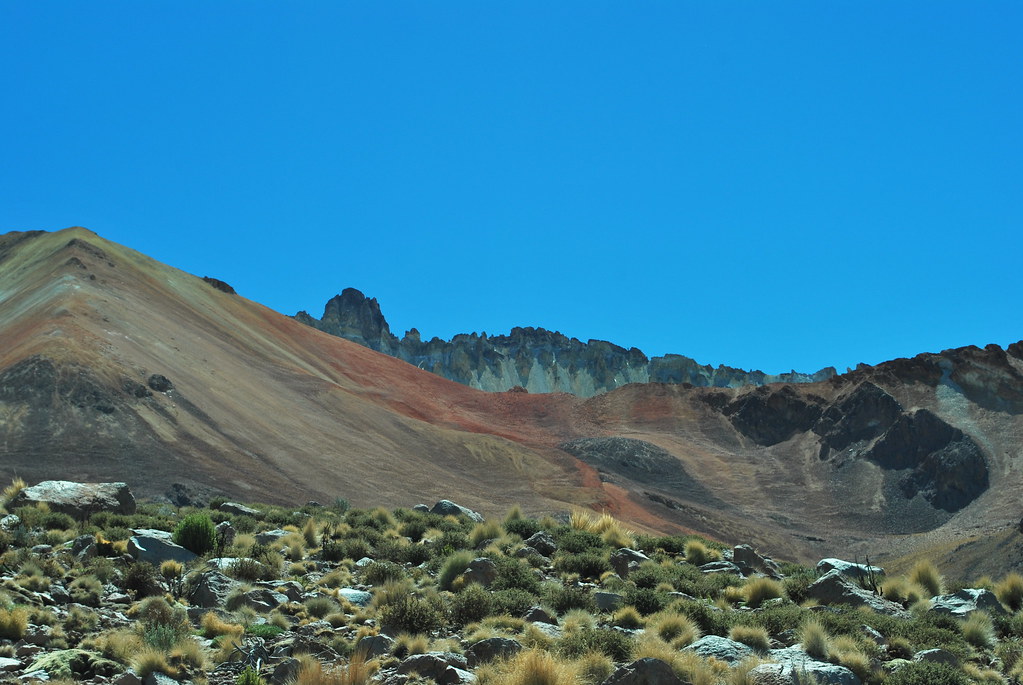
Tunupa is a dormant stratovolcano rising prominently on the northern edge of the Uyuni Salt Flats in Bolivia’s Altiplano. Formed through successive eruptions of viscous lava and ash, Tunupa’s layered structure is typical of stratovolcanoes. Its volcanic activity ceased thousands of years ago, leaving behind a rugged summit and extensive lava flows. The volcano’s slopes are rich in volcanic minerals and fertile soil, supporting unique flora and fauna. Notably, the volcano features caves containing ancient mummies, preserved by the dry, volcanic environment. Fumaroles and sulfur deposits are minimal due to dormancy, but the volcanic landscape remains striking, with steep ash slopes and scree fields sculpted by erosion. Tunupa’s geological history is intertwined with local indigenous beliefs, who regard it as a sacred mountain and deity.
The Volcano Trek: Terrain and Hiking Experience
The trek up Tunupa Volcano is a demanding yet rewarding high-altitude hike that challenges both physical endurance and acclimatization. Starting from the village of Coquesa or the Mirador de las Momias parking area, the trail ascends steeply through volcanic ash slopes and loose scree, requiring careful footing and steady pacing. The initial section passes through fertile volcanic soil, where stone walls enclose small fields, before transitioning to more barren terrain. Hikers encounter a variety of surfaces including dusty dirt paths, rocky outcrops, and scree slopes that can be slippery and unstable, especially near the summit. The altitude, ranging from approximately 3,600 meters at the trailhead to 5,490 meters at the summit, imposes significant physiological stress, with thinner air causing breathlessness and fatigue. Wind conditions can be strong and temperatures fluctuate dramatically, from cold mornings below freezing to warmer midday sun exposure. The trail is well-marked but requires good navigation skills, especially in fog or low visibility. Along the way, trekkers pass archaeological sites such as caves with mummies, adding cultural depth to the physical challenge. The final ascent involves negotiating loose volcanic scree on steep slopes, demanding sure-footedness and trekking poles for balance. Despite the difficulty, the trail rewards hikers with sweeping views of the Uyuni Salt Flats, surrounding Andean peaks, and diverse flora including hummingbirds and native camelids. The descent offers a thrilling experience sliding down volcanic scree, but caution is advised to avoid falls. Overall, the terrain’s mix of volcanic ash, rock, and salt flat edges creates a unique hiking environment that combines natural beauty with geological intrigue.

What Makes This Volcano Trek Unique
Tunupa Volcano stands out for its breathtaking vantage point over the world’s largest salt flat, the Salar de Uyuni. The trek combines geological wonder with rich cultural heritage, featuring ancient caves with mummies and sacred sites revered by indigenous communities. The surreal landscape of endless white salt contrasting with the dark volcanic slopes creates a dramatic visual spectacle. Unlike many volcanoes, Tunupa’s dormant status allows safe exploration of its summit and crater rim areas without active volcanic hazards. The hike offers a rare opportunity to experience high-altitude Andean ecosystems, spotting unique wildlife such as vizcachas and hummingbirds. The panoramic views from the summit encompass distant volcanoes, colorful lagoons, and the vast salt desert, making it a photographer’s paradise. The combination of geological, ecological, and cultural elements makes Tunupa a singular volcano trekking destination.
The Summit and Crater Experience
Reaching the summit of Tunupa Volcano is a moment of profound awe. At 5,490 meters, the panoramic vista reveals the endless expanse of the Uyuni Salt Flats, stretching like a shimmering white ocean to the horizon. The air is thin and crisp, carrying the faint scent of earth and volcanic minerals. From the summit, trekkers can observe the rugged crater rim, eroded but imposing, with steep slopes descending into the volcanic cone. The silence is punctuated only by the wind sweeping across the barren landscape. The view extends to neighboring volcanoes such as Sajama and Acotango, framed by the vast Altiplano sky. The experience is both humbling and exhilarating, a rare chance to stand atop a sacred Andean mountain and witness the raw power of geological forces that shaped this extraordinary region.

Best Time to Trek Tunupa Volcano
The optimal trekking season for Tunupa Volcano is during the dry months from May to September. During this period, the weather is more stable with clear skies, minimal rainfall, and lower humidity, providing safer trail conditions and better visibility. Temperatures can be cold, especially in early mornings and evenings, often dropping below freezing, so proper cold-weather gear is essential. The rainy season from December to March brings heavy rains that transform the Uyuni Salt Flats into a vast mirror of water, making trekking difficult and potentially hazardous due to slippery terrain and electrical storms. Altitude acclimatization is crucial year-round, as the high elevation can cause altitude sickness. Early morning starts are recommended to avoid afternoon winds and to enjoy sunrise views over the salt flats. Monitoring local weather forecasts and volcanic activity reports, although Tunupa is dormant, is advisable for safety.
Trekking Routes and Trail Options
The primary route to the summit of Tunupa Volcano begins at the Mirador de las Momias parking area near the village of Coquesa, situated at approximately 3,600 meters elevation. From here, the trail ascends southwest along the volcano’s shoulder, covering roughly 17 to 18 kilometers round trip with an elevation gain of about 800 meters. The path is well-marked and moderately trafficked, passing archaeological sites including caves with ancient mummies. Trekkers typically spend 5 to 6 hours ascending and 3 to 4 hours descending, making it a full-day hike. Alternative approaches include starting from the village of Tahua, which lies on the southern edge of the salt flats, though this route is less frequented and requires local guidance. Guided tours often incorporate the hike into multi-day itineraries that include visits to the Uyuni Salt Flats, Incahuasi Island, and other regional attractions. Self-guided trekkers should obtain GPS tracks available from sources like Wikiloc and ensure they have adequate acclimatization and supplies. The trail’s moderate difficulty and high altitude demand preparation but reward hikers with spectacular views and cultural insights.

Difficulty Assessment
Tunupa Volcano presents a moderate volcano trek suitable for hikers with good fitness and some high-altitude experience. The terrain includes steep ash slopes, loose scree, and rocky paths that require sure-footedness and trekking poles for stability. The altitude gain of approximately 800 meters from trailhead to summit, combined with the summit elevation near 5,500 meters, poses significant challenges related to thin air and potential altitude sickness. The trail is non-technical, requiring no climbing equipment, but the physical demands and environmental conditions elevate the difficulty beyond beginner level. Weather can be variable, with cold temperatures and strong winds adding to the challenge. Overall, Tunupa is classified as a moderate volcano trek, accessible to prepared hikers who acclimatize properly and respect the mountain’s conditions.
Essential Volcano Trekking Gear
For trekking Tunupa Volcano, essential gear includes sturdy hiking boots with excellent grip to navigate loose volcanic scree and rocky trails. Trekking poles are highly recommended to aid balance and reduce strain on knees during ascent and descent. Layered clothing is necessary to adapt to temperature fluctuations, including a moisture-wicking base layer, insulating mid-layer, and windproof, waterproof outer shell. A warm hat, gloves, and sunglasses protect against cold and intense high-altitude sun exposure. A headlamp is useful for early morning starts. Due to the dry environment, ample water and hydration systems are critical to prevent dehydration. Sun protection with high SPF sunscreen and lip balm is essential as UV radiation is strong at altitude. A basic first aid kit, including medication for altitude sickness, is advised. While volcanic gases are minimal due to dormancy, carrying a lightweight face mask can be helpful if dust conditions arise. Navigation tools such as GPS devices or maps, along with snacks for energy, complete the gear list.
Safety and Volcanic Hazards
Although Tunupa Volcano is dormant, safety considerations remain paramount for trekkers. The high altitude poses risks of altitude sickness, including headaches, nausea, and dizziness; proper acclimatization and hydration are essential. The steep volcanic ash slopes and loose scree increase the risk of slips and falls, requiring careful footing and use of trekking poles. Weather can change rapidly, with strong winds and cold temperatures that may cause hypothermia if unprepared. While there is no active volcanic gas emission, dust and ash can irritate respiratory systems, so carrying a mask is advisable. The crater rim is eroded and unstable in places; hikers should avoid venturing too close to edges. Local authorities monitor the area, but as the volcano is dormant, no eruption warnings are currently active. Trekkers should inform local guides or authorities of their plans and carry communication devices. Emergency services are limited in this remote region, so self-sufficiency and cautious planning are critical.
Permits, Guides, and Logistics
Visiting Tunupa Volcano requires purchasing a mountain entry permit, commonly referred to as a ‘mountain fee,’ which varies depending on the altitude reached. This fee is typically obtained in the nearby village of Tahua or Coquesa and ranges around 30 to 500 Bolivianos depending on the access point and services. Hiring a local guide is highly recommended for safety, navigation, and cultural interpretation, especially for first-time visitors or those unfamiliar with high-altitude trekking. Several reputable tour operators offer guided Tunupa treks, including Jukil de los Andes, La Torre Tours, Skyline Uyuni, Andean Ascents, and Vmelite. These companies provide comprehensive packages combining transportation from Uyuni, guided hikes, accommodation, and cultural visits. Logistics involve traveling to Uyuni, the regional hub accessible by bus or flight from La Paz, followed by a 1 to 2-hour drive to trailheads. The trailhead at Mirador de las Momias near Coquesa is the most popular starting point. Trekkers should arrange transportation in advance, as public transit options to trailheads are limited. Accommodation options range from local lodges such as Tambo Coquesa Lodge to salt hotels near the salt flats. Visitors must prepare for altitude acclimatization and bring adequate supplies, as facilities on the mountain are minimal. The dry season from May to September offers the best conditions for trekking. Overall, careful planning, permit acquisition, and use of experienced guides ensure a safe and enriching Tunupa Volcano trekking experience.
Where to Stay Near Tunupa Volcano
Accommodations near Tunupa Volcano cater to a range of preferences, from rustic lodges to unique salt hotels. The village of Coquesa, located near the Mirador de las Momias trailhead, offers several guesthouses and small lodges such as Tambo Coquesa Lodge. This lodge is situated at 3,600 meters elevation on the northern shore of the Uyuni Salt Flats, providing comfortable rooms with private bathrooms, hot showers, free WiFi, and a restaurant serving local cuisine. Its location offers stunning sunrise and sunset views over the salt flats and volcano. For travelers seeking a more unique experience, the Hotel de Sal Luna Salada, located on the eastern edge of the salt flats, is constructed entirely from salt blocks, including walls, floors, and furniture. It offers a surreal stay immersed in the salt desert environment. Additionally, Explora Uyuni Lodge, nestled on the slopes of Tunupa Volcano, provides luxury accommodations with sustainable design, locally sourced meals, and expert guides. It serves as an excellent base for exploring the volcano and surrounding Altiplano. The regional hub of Uyuni town offers a wider selection of hostels, hotels, and tour operators, with easy access to transportation. Most accommodations provide shuttle services to trailheads. Given the high altitude and remote location, booking in advance is recommended, especially during peak trekking season. Staying near Coquesa or Uyuni allows trekkers to acclimatize and prepare for the demanding ascent of Tunupa Volcano.


