
Mount Balbi Volcano Trekking Guide: Conquering Papua New Guinea’s Highest Stratovolcano
Mount Balbi, the highest volcano in Papua New Guinea, offers a challenging and rewarding technical mountaineering trek through dense tropical forests, rugged terrain, and geothermal landscapes culminating in a stunning crater lake. This guide covers geological insights, trekking routes, safety, permits, and accommodation options for adventurers seeking an extraordinary volcanic experience on Bougainville Island.
Quick Volcano Snapshot
| Attribute | Value |
|---|---|
| Volcano type | Stratovolcano |
| Elevation | 2715 m (8,907 ft) |
| Location | Bougainville Island, Papua New Guinea |
| Activity status | Dormant with persistent fumarolic activity |
| Trekking difficulty | Technical mountaineering |
| Typical trek duration | 2-3 days (plus additional nights at base village) |
| Altitude gain | Approx. 2715 m from sea level |
| Terrain type | Dense tropical rainforest, bamboo and moss forest, alpine rush, lava domes, fumarole fields |
| Best season | Dry season (May to October) |
| Temperature range | Tropical at base, cold near summit with temperature drops |
| Permit requirement | Required; permits arranged through local tour operators |
Introduction: The Experience of Hiking Mount Balbi
Approaching Mount Balbi, the highest peak on Bougainville Island, is an immersion into a world where raw geological forces shape the landscape. The trek begins amidst dense tropical rainforest, gradually ascending through bamboo and moss forests before reaching the alpine zones near the summit. The contrast between lush greenery and barren volcanic terrain is striking. As you climb, the air cools and the terrain becomes rugged, with fumaroles venting steam and sulfurous gases. Reaching the summit, the sight of the vivid blue crater lake nestled among five craters evokes a profound sense of awe and accomplishment. This journey is not just a hike but a passage through time and nature’s power.
The Volcano Itself: Geological Background
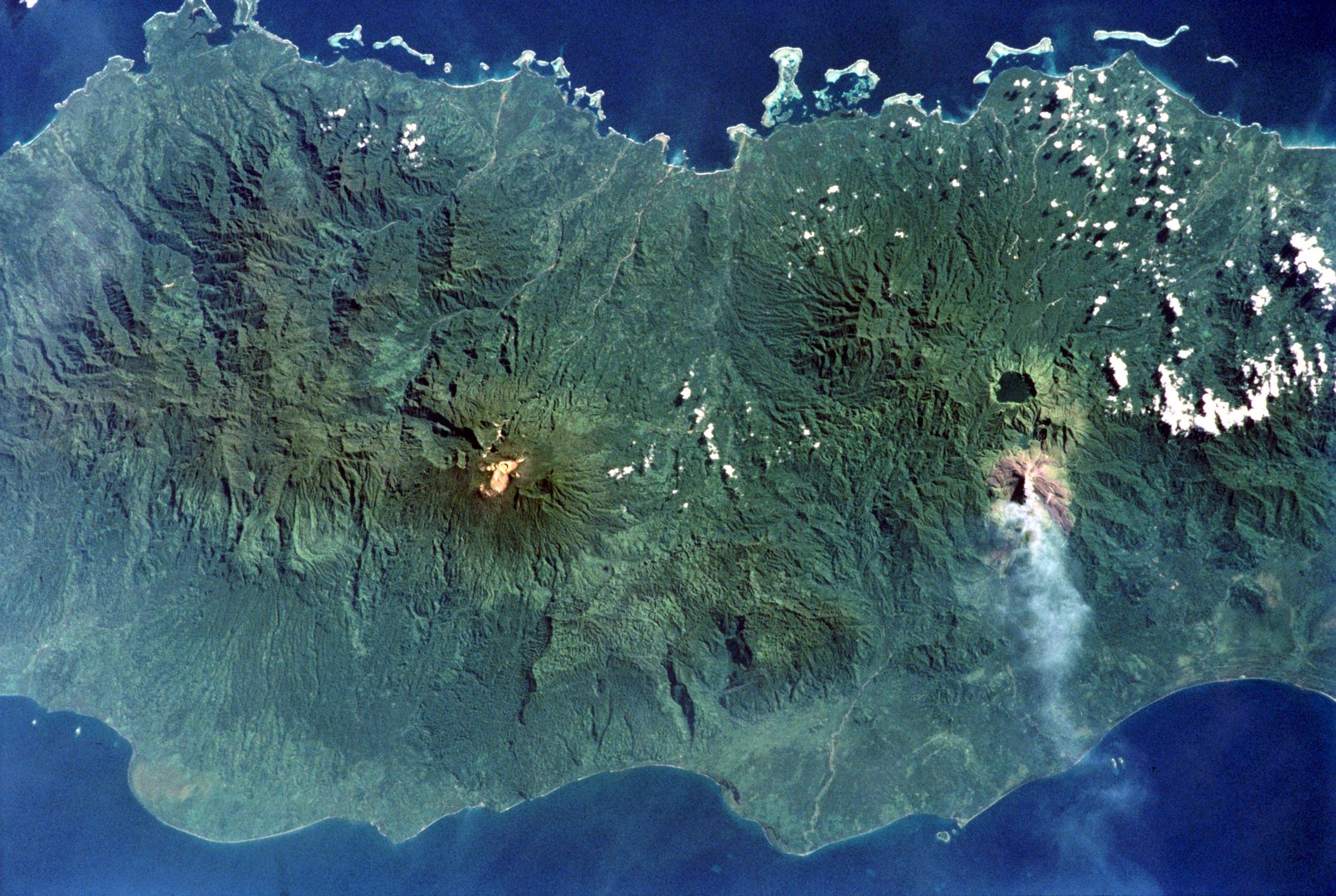
Mount Balbi is a complex andesitic stratovolcano forming the highest point on Bougainville Island at 2715 meters. It consists of multiple coalesced cones and lava domes aligned along a northwest-southeast ridge. The summit area hosts five well-preserved craters, one containing a striking crater lake, and an extensive solfatara field with active fumaroles and hot springs. Although no confirmed eruptions have occurred in historic times, geological evidence suggests a possible explosive event around 1800-1850. The volcano’s flanks are deeply incised by amphitheater-headed valleys, likely formed by past sector collapses. Persistent geothermal activity indicates an active hydrothermal system beneath the surface. The volcanic rocks are primarily andesitic, contributing to the steep and rugged terrain climbers encounter.
The Volcano Trek: Terrain and Hiking Experience
Trekking Mount Balbi is a demanding technical mountaineering experience that challenges even seasoned hikers. The journey begins in dense tropical rainforest at lower elevations, where thick vegetation and humid conditions require careful navigation. As the trail ascends, the forest transitions into bamboo and moss forests between 1220 and 2290 meters, where footing becomes uneven with roots and slippery moss-covered rocks. Above 2290 meters, the terrain shifts to alpine rush and volcanic rock, exposing hikers to colder temperatures and stronger winds.
The trail is rugged and often steep, requiring scrambling over loose volcanic rocks and navigating fallen trees and dry riverbeds. Porters frequently clear the path, but trekkers should be prepared for uneven ground and occasional mud. The presence of fumaroles near the summit adds a surreal atmosphere, with steam vents releasing sulfurous gases that can be smelled and felt as warmth on the skin.
Altitude effects become noticeable near the summit, where oxygen levels drop and the cold intensifies. Hikers must pace themselves to avoid altitude sickness. The final ascent involves ridge walking with exposure to wind and steep drops, demanding surefootedness and stamina. The volcanic terrain includes lava domes and solfatara fields, with some areas of loose scree that require careful footing.
Despite the challenges, the trek rewards adventurers with spectacular views of Bougainville’s rugged landscape, the Pacific Ocean, and the vivid blue crater lake nestled within one of the summit craters. The combination of dense jungle, volcanic geology, and geothermal activity creates a unique hiking experience that blends natural beauty with geological wonder.
What Makes This Volcano Trek Unique
Mount Balbi stands out as Papua New Guinea’s highest volcano, offering a rare combination of tropical biodiversity and volcanic geology. Its summit hosts five distinct craters, including one with a vibrant blue crater lake, a feature seldom seen on volcano treks worldwide. The persistent fumarolic activity and solfatara fields provide a dynamic geothermal landscape, with steam vents and sulfur deposits adding to the otherworldly atmosphere.
The trek traverses diverse ecosystems, from dense rainforests to alpine vegetation, showcasing the island’s rich biodiversity. The cultural experience is equally compelling, as trekkers engage with local Bougainville communities and their traditions. The remote location and technical difficulty ensure that the journey remains an exclusive adventure for dedicated mountaineers seeking untouched volcanic wilderness.
The Summit and Crater Experience
Reaching Mount Balbi’s summit is a moment of profound triumph and sensory immersion. The panoramic views stretch across Bougainville’s rugged terrain and the vast Pacific Ocean beyond. The summit ridge reveals five volcanic craters, each telling a story of the mountain’s fiery past. The largest crater houses a mesmerizing blue lake, its color intensified by mineral-rich waters and volcanic activity.
The air near the summit carries the distinct scent of sulfur, and the warmth from fumaroles contrasts with the cool mountain breeze. The sound of escaping gases hissing from vents punctuates the silence, reminding climbers of the volcano’s latent power. Standing at the highest point on Bougainville, surrounded by volcanic domes and steaming vents, hikers experience a rare connection to Earth’s dynamic forces.
Best Time to Trek Mount Balbi
The optimal time to trek Mount Balbi is during the dry season, typically from May to October. During these months, the trails are more accessible, and weather conditions are generally stable, reducing the risk of heavy rains and slippery terrain. The dry season also offers clearer skies, enhancing summit views and photography opportunities.
Avoid the cyclone season from November to April, when heavy rains, landslides, and unstable trail conditions increase hazards. Additionally, volcanic gas emissions and fumarolic activity are relatively stable year-round, but climbers should monitor local advisories for any changes.
Early morning starts are recommended to avoid afternoon weather changes and to experience the summit at sunrise, when the volcanic landscape is bathed in dramatic light.
Trekking Routes and Trail Options
The primary route to Mount Balbi’s summit begins from the village of Togorau, located on the northern side of Bougainville Island. Trekkers typically spend one or two nights in Togorau for acclimatization and preparation before starting the ascent. The trail from Togorau to the summit is approximately a 2-3 day trek, depending on fitness levels and weather conditions.
The route involves dense jungle trekking, crossing dry riverbeds, and navigating steep ascents through bamboo and moss forests. Porters and local guides are essential for clearing paths and carrying supplies. Camping is done in the bush along the trail, with meals prepared over open fires.
There are no alternative established routes due to the remote and rugged nature of the terrain. The trail is technical and requires mountaineering skills, especially near the summit where ridge walking and scrambling over volcanic rock are necessary.
Guided treks are strongly recommended for safety, navigation, and cultural engagement. Operators such as Rotokas Ecotourism and Bougainville Experience Tours provide comprehensive packages including permits, guides, porters, accommodation in base villages, and transport logistics.
Difficulty Assessment
Mount Balbi is classified as a technical mountaineering trek, demanding high fitness levels, experience with rugged terrain, and the ability to navigate dense jungle and volcanic rock. The trail’s steep ascents, loose scree, and exposure near the summit require surefootedness and stamina.
Altitude gain to 2715 meters can cause altitude-related symptoms; acclimatization is essential. The tropical climate at lower elevations transitions to cold, windy conditions near the summit, necessitating appropriate gear.
This trek is not suitable for beginners or casual hikers. It is best undertaken by experienced mountaineers or trekkers with prior high-altitude and technical hiking experience.
Essential Volcano Trekking Gear
Key gear for Mount Balbi includes sturdy hiking boots with excellent grip for volcanic rock and slippery forest trails, trekking poles for stability on steep and uneven terrain, and gaiters to protect against volcanic ash and mud. A windproof and waterproof jacket is essential for summit conditions and unpredictable weather.
Due to fumarolic gases, a lightweight gas mask or respirator may be advisable for sensitive individuals. Headlamps are necessary for early starts and camping nights. Hydration systems and water purification tablets are critical, as water sources may be limited.
Sun protection including hats, sunglasses, and high-SPF sunscreen is important due to limited shade in alpine zones. Warm layers and thermal clothing are required for cold summit temperatures.
Safety and Volcanic Hazards
Mount Balbi’s dormant status does not eliminate volcanic hazards. Persistent fumaroles emit sulfurous gases that can cause respiratory irritation; trekkers should avoid prolonged exposure near vents. The summit area features unstable crater edges and loose volcanic scree, increasing the risk of falls.
Sudden phreatic explosions, though rare, are possible due to the active hydrothermal system. Climbers should heed local warnings and avoid restricted areas. Weather can change rapidly, with cold temperatures, strong winds, and heavy rain posing additional risks.
The region’s remoteness means emergency services are limited; hiring experienced local guides and porters is essential. Monitoring by the Rabaul Volcano Observatory is sporadic, so personal vigilance and adherence to safety protocols are critical.
Permits, Guides, and Logistics
Trekking Mount Balbi requires permits arranged through local tour operators, who coordinate with landowners and authorities. The village of Togorau serves as the base for the ascent, with accommodation and logistical support provided by operators such as Rotokas Ecotourism (contact: +675 7078 0211, rotokas.ecotourism@gmail.com), Bougainville Experience Tours (bougtours.com; tel. +675 7365 6050), and International Indigenous Tourism Marketing (+61 401 331 251, collincowellredcent@hotmail.com).
Permit costs vary depending on group size and trek duration; for example, a two-day hike for one person costs approximately 693 Papua New Guinea Kina (PGK), while groups of six pay around 518 PGK per person. These fees typically cover meals (two per day), porters, guides, transport to and from the trailhead, accommodation in Togorau, and track entrance fees.
Due to the technical nature of the trek and the region’s security considerations, hiring experienced guides is mandatory. Guides provide navigation, safety oversight, and cultural interpretation. Porters assist with carrying equipment and clearing the trail.
Travelers should plan for additional nights in Togorau before and after the trek for acclimatization and rest. Transport to Bougainville Island is usually via flights to Buka or Arawa, followed by local transport to Togorau. Given the remote location and limited infrastructure, thorough preparation and communication with tour operators are essential for a safe and successful expedition.
Where to Stay Near Mount Balbi
Accommodation options near Mount Balbi are limited and primarily centered around the village of Togorau, which serves as the main base for trekkers. Lodging here is basic but comfortable, often arranged by tour operators as part of trekking packages. Facilities typically include simple guesthouses or homestays offering meals, sleeping mats or beds, and communal areas.
Due to the remote location, amenities are minimal, and electricity or running water may be limited. Staying in Togorau allows for acclimatization and preparation before the ascent, as well as rest after the trek.
For travelers arriving or departing Bougainville Island, accommodations are available in larger towns such as Buka and Arawa. These towns offer modest hotels and guesthouses with more facilities, including restaurants, shops, and transport services.
Examples include local guesthouses and small lodges that provide basic comfort and security. Given the island’s developing tourism infrastructure, booking through reputable tour operators ensures access to reliable accommodation and logistical support.
Visitors should be prepared for rustic conditions and embrace the opportunity to experience authentic local hospitality. The proximity of Togorau to the trailhead makes it the most practical and strategic location for staging the Mount Balbi trek.