
Mount Moroto Volcano Trekking Guide: Exploring Uganda’s Sacred Stratovolcano in Karamoja
Mount Moroto, a dormant stratovolcano in northeastern Uganda, offers a challenging and culturally rich trekking experience. This guide covers its geology, hiking terrain, routes, permits, safety, and accommodation options near the mountain.
Quick Volcano Snapshot
| Attribute | Value |
|---|---|
| Volcano type | Stratovolcano |
| Elevation | 3,083 meters (10,115 feet) |
| Location | Northeastern Uganda, Karamoja region |
| Activity status | Dormant |
| Trekking difficulty | Moderate |
| Typical trek duration | 1-3 days |
| Altitude gain | Approximately 1,700 meters |
| Terrain type | Dry thorn savanna, montane forest, rocky slopes, steep ridges |
| Best season | December to March and June to September (dry seasons) |
| Temperature range | 15°C to 30°C (59°F to 86°F) |
| Permit requirement | Required – Uganda Wildlife Authority permits |
The Experience of Hiking Mount Moroto
Approaching Mount Moroto, hikers are greeted by a dramatic silhouette rising sharply from the arid Karamoja plains. The landscape is a striking contrast of rugged volcanic ridges, dry thorn savanna, and pockets of montane forest. As you ascend, the air cools and the terrain shifts, revealing a tapestry of unique flora and fauna. The trek offers a profound sense of connection to the earth’s geological forces and the cultural heartbeat of the Tepeth people. Reaching the summit, the panoramic views stretch across Uganda, Kenya’s Turkana region, and even into South Sudan, rewarding the effort with a breathtaking spectacle of nature’s grandeur.

Geological Background of Mount Moroto
Mount Moroto is a prominent stratovolcano forming part of the Eastern Rift Valley system in northeastern Uganda. Its origins trace back over 500 million years, composed mainly of metamorphic and igneous rocks such as granite and gneiss. The mountain’s rugged topography, including steep escarpments and ridgelines, results from prolonged tectonic activity and erosion. Volcanic plugs and basalt outcrops punctuate the landscape, while seasonal rivers and waterfalls carve through its slopes. The dormant volcano’s geological features include rocky outcrops and unique mineral deposits, offering a fascinating study for geologists and trekkers alike. The mountain’s formation reflects the dynamic processes shaping the East African Rift, making it a living museum of Earth’s volcanic history.
Terrain and Hiking Experience on Mount Moroto
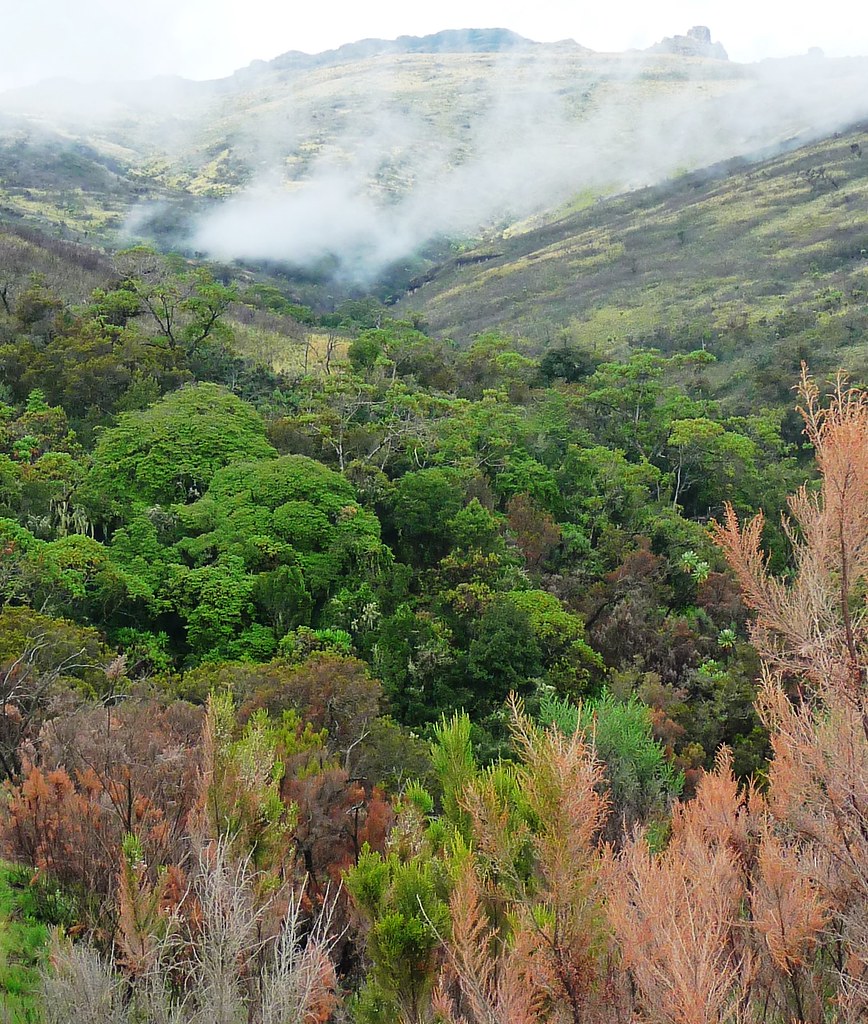
Hiking Mount Moroto is a physically rewarding adventure through diverse and challenging terrain. The trek begins near Moroto town at around 1,370 meters elevation, immediately presenting steep ascents through dry thorn savanna dotted with acacia and euphorbia. Early sections of the trail are well-trodden but rugged, winding past pastoralist settlements and small streams. As you gain altitude, the environment transitions into montane forest with dense bamboo groves and podocarpus trees, providing shade and cooler temperatures.
The trail features a mix of rocky paths, loose scree, and steep ridges requiring sure-footedness and stamina. Trekkers encounter sections of rock scrambling, especially near the summit areas such as Imagit peak, where a final steep rock climb demands basic climbing skills and caution. The terrain’s uneven surfaces and occasional bushy sections with thorny vegetation necessitate long sleeves and sturdy boots.
Altitude gain of approximately 1,700 meters over the course of the hike can induce mild altitude effects, so pacing and hydration are critical. Wind conditions near the summit can be brisk, and temperature shifts between the base and peak are notable, with cooler air at higher elevations.
The trail offers spectacular views into the Karamoja plains, neighboring Kenya’s Turkana region, and distant mountain ranges. Wildlife sightings include monkeys, wildcats, and over 220 bird species, making the hike a rich ecological experience. The remote and rugged nature of the mountain means hikers should be prepared for limited infrastructure, carrying sufficient water, food, and camping gear if overnighting.
Overall, the Mount Moroto trek is moderately challenging, combining physical exertion with the rewards of pristine wilderness, cultural encounters with the Tepeth people, and breathtaking volcanic landscapes.
What Makes the Mount Moroto Trek Unique
Mount Moroto stands out for its blend of geological grandeur, cultural depth, and ecological diversity. Unlike more frequented mountains in Uganda, it offers solitude and an authentic wilderness experience. The mountain is sacred to the indigenous Tepeth people, whose traditions and rock art enrich the trek with cultural significance rarely found on other volcano hikes.
Ecologically, the mountain supports a rare mix of dry thorn savanna and montane forest ecosystems, hosting over 220 bird species and elusive wildlife such as golden cats and vervet monkeys. The panoramic vistas from the summit encompass the vast Karamoja plains, the Turkana region of Kenya, and even parts of South Sudan, providing a unique cross-border perspective.
The trek’s rugged terrain, including steep ridges and rock climbing sections, challenges hikers physically while rewarding them with intimate encounters with nature and local communities. The opportunity to camp under starry skies in a remote volcanic landscape adds to the adventure’s allure. Mount Moroto’s combination of natural beauty, cultural heritage, and off-the-beaten-path appeal makes it a truly distinctive volcano trekking destination.
Summit and Crater Experience on Mount Moroto
Reaching the summit of Mount Moroto is a moment of profound awe and accomplishment. The peak, particularly at Imagit and Sokodek hills, offers sweeping 360-degree views over the Karamoja region’s arid plains, the rugged ridges of the Eastern Rift Valley, and the distant landscapes of Kenya and South Sudan. The air is crisp and carries the faint scent of earth and wild vegetation.
Though the volcano is dormant, the summit’s rocky outcrops and cliffs provide dramatic vantage points. The silence is punctuated only by the wind and distant bird calls, creating a serene atmosphere. The sense of standing atop an ancient volcanic giant, witnessing the vastness of the East African Rift, evokes a deep connection to the planet’s geological forces.
The summit area is often used for camping, allowing trekkers to experience the mountain’s nocturnal beauty and sunrise vistas. The changing light reveals the mountain’s textures and colors, from the reddish volcanic rocks to the green patches of forest below. This sensory experience—sight, sound, and smell—makes the summit a highlight of the Mount Moroto trek.
Best Time to Trek Mount Moroto
The optimal periods for trekking Mount Moroto are during Uganda’s dry seasons, from December to March and June to September. These months offer stable weather, clearer skies, and safer trail conditions. Avoiding the rainy seasons of April to May and October to November is advisable, as trails become slippery and visibility can be poor.
During the dry season, temperatures range from warm days around 25°C to cooler nights near 15°C, especially at higher altitudes. Early morning starts are recommended to take advantage of cooler temperatures and to reach summits before midday heat or afternoon winds.
Volcanic activity is dormant, so there are no restrictions related to eruptions, but hikers should always check local weather and trail conditions before departure. Seasonal considerations also include the availability of local guides and accommodations, which are more accessible during peak trekking months.
Routes and Trail Options on Mount Moroto
Mount Moroto offers several trekking routes catering to different levels of experience and time availability. The two primary starting points are Moroto town and Tapac Parish, each providing distinct trail experiences.
From Moroto town, the trail begins at Singila (approx. 1,370m elevation) and ascends steeply through thorn savanna and montane forest to the Leworon campsite at 2,300m. From here, hikers continue to the Imagit peak, navigating between two deep valleys with views of Lokiriama in Kenya and the Karamoja plains. This route involves a full day’s hike (around 9 hours) with sections of rock scrambling near the summit. Overnight camping is common at a clearing below Imagit peak.
The descent route often leads to Kodonyo village via a rugged, less frequented trail offering night views of Moroto town and the Kenyan mining town across the border. This path is challenging and tests mental resilience but rewards with unique landscapes.
Alternatively, shorter day hikes are possible from Moroto town, suitable for less experienced trekkers or those with limited time. Tapac Parish offers access to other trails leading to Moroto’s peaks and waterfalls, providing options for moderate day hikes.
Guided treks are recommended for safety and cultural insight. Local guides from the Tepeth community enhance the experience by sharing knowledge of the mountain’s ecology and traditions. Self-guided options exist but require good navigation skills and preparation.
Overall, Mount Moroto’s trail network accommodates flexible itineraries from quick day hikes to multi-day adventures, blending physical challenge with cultural and natural discovery.
Difficulty Assessment of Mount Moroto Trek
Mount Moroto is classified as a moderate volcano trek with some challenging sections. The hike demands good physical fitness due to steep ascents, significant altitude gain (approximately 1,700 meters), and rugged terrain including rocky paths and loose scree.
The final approach to peaks like Imagit involves rock scrambling and at least one section requiring basic rock climbing skills, making it unsuitable for beginners without experience. Altitude effects are generally mild but can affect sensitive hikers.
The trail’s uneven surfaces, thorny vegetation, and exposure to sun and wind require proper gear and stamina. The remote location means limited rescue options, so hikers must be self-reliant and prepared for changing weather.
In summary, the trek suits moderately experienced hikers comfortable with sustained uphill hiking, some technical scrambling, and camping in wilderness conditions. It is more demanding than typical day hikes but less technical than high-altitude mountaineering.
Essential Gear for Mount Moroto Volcano Trekking
Successful trekking on Mount Moroto requires gear suited to rugged volcanic terrain and variable weather. Essential items include sturdy hiking boots with good grip for rocky and loose surfaces, and trekking poles to aid balance on steep ascents and descents.
Long-sleeved shirts and pants protect against thorny bushes and sun exposure. A wide-brimmed hat, sunglasses, and high-SPF sunscreen are vital due to strong equatorial sun and sparse shade.
Hydration systems or water bottles with at least 2 liters capacity are necessary; water purification tablets are recommended for natural water sources. A windproof and waterproof jacket guards against sudden weather changes.
For overnight camping, a lightweight tent, sleeping bag, and cooking equipment are needed. A headlamp is useful for early starts or night activities. Altitude sickness medication such as Diamox can help sensitive hikers.
Additional items include snacks for energy, a first aid kit, insect repellent, a camera for capturing stunning views, and a power bank for charging devices. Carrying a trash bag ensures responsible waste management.
Overall, preparation with appropriate gear enhances safety, comfort, and enjoyment on this remote and challenging volcano trek.
Safety and Volcanic Hazards on Mount Moroto
Mount Moroto is a dormant volcano with no recent eruptive activity, minimizing volcanic hazards such as lava flows or ash emissions. However, trekkers must remain vigilant about natural risks inherent to mountainous terrain.
Steep and uneven trails increase the risk of slips and falls, especially on loose scree and rocky sections near the summit. Rockfall hazards exist in cliff areas, so caution is advised. Unstable crater edges and exposed ridges require careful navigation.
Volcanic gases are not a concern due to dormancy, but hikers should monitor weather conditions closely as sudden changes can bring strong winds, rain, or temperature drops.
Wildlife encounters, including monkeys and wildcats, are generally safe but require respect and distance. Carrying a first aid kit and informing local guides of any health issues is prudent.
The Uganda Wildlife Authority and local guides provide monitoring and safety briefings. Hiring experienced local guides enhances safety by ensuring route knowledge and emergency preparedness.
In summary, while volcanic hazards are minimal, terrain challenges and environmental factors necessitate thorough preparation, caution, and respect for the mountain’s natural conditions.
Permits, Guides, and Logistics for Mount Moroto Trekking
Trekking Mount Moroto requires obtaining hiking permits issued by the Uganda Wildlife Authority (UWA). These permits support conservation efforts and ensure regulated access to the mountain’s protected areas. Permit costs vary but typically range around $30 to $50 per person, depending on the duration and route.
Permits can be secured through UWA offices in Kampala or via authorized local tour operators such as Kara-Tunga, Turkana Wildlife Safaris, Ganyana Safaris Uganda, Kubwa Five Safaris, Tubale Safaris, and Rwenzori Expeditions. These operators also provide experienced local guides familiar with the mountain’s terrain, culture, and safety protocols.
Hiring a guide is strongly recommended for navigation, cultural interpretation, and emergency support. Guides often arrange porters to assist with carrying gear, enhancing the trekking experience and supporting local communities.
Logistically, Mount Moroto is accessible by road from Kampala via Mbale and Soroti, with a journey time of 8 to 10 hours. Charter flights to Moroto Airstrip are available for quicker access, followed by a short drive to the trailhead. A 4×4 vehicle is advisable, especially during rainy seasons when roads can be challenging.
Accommodation options near the mountain include the Kara-Tunga Karamoja Safari Camp, Mount Moroto Hotel, Tita Tourist Resort, and Kidepo Savannah Lodge. These establishments offer a range of amenities from budget to luxury and serve as bases for the trek.
Trekking itineraries typically span 1 to 3 days, with options for day hikes or multi-day camping expeditions. Trekkers should prepare for limited infrastructure on the mountain, carrying sufficient water, food, and camping equipment if overnighting.
In summary, careful planning involving permits, guides, transport, and accommodation arrangements is essential for a safe and rewarding Mount Moroto trekking experience.
Where to Stay Near Mount Moroto
Accommodation near Mount Moroto caters to a range of preferences, from rustic camping to comfortable lodges. The town of Moroto, located approximately 3 kilometers from the mountain base, serves as the primary gateway and offers several lodging options.
Kara-Tunga Karamoja Safari Camp is a standout choice situated on the mountain’s slopes. It features six ensuite safari tents with private verandahs, solar-heated showers, flushing toilets, and electricity for charging devices. The camp blends traditional Karamoja culture with modern comfort and operates an onsite restaurant offering local and international cuisine. Kara-Tunga also organizes cultural tours and guided hikes, making it an ideal base for trekking.
Mount Moroto Hotel, located in Moroto town, provides eco-friendly accommodations with spacious rooms decorated in traditional Karimojong style. Facilities include en-suite bathrooms, free Wi-Fi, an onsite restaurant serving fresh local dishes, and conference amenities. The hotel offers standard rooms, deluxe suites with mountain views, and budget dormitories for backpackers.
Tita Tourist Resort is another notable option, offering a colonial-style ambiance with modern amenities. It features family rooms, a restaurant, bar, garden, and 24-hour front desk services. Guests enjoy mountain views from balconies and terraces.
Kidepo Savannah Lodge, although slightly farther, offers self-contained safari tents and camping options amidst the savannah landscape. It is known for its scenic views and proximity to wildlife areas.
For trekkers preferring camping on the mountain, designated campsites such as Leworon and below Imagit peak provide wild camping experiences with access to streams for water. Hikers must bring their own camping gear and supplies.
Overall, accommodations near Mount Moroto combine cultural immersion, comfort, and convenience, supporting both day hikes and multi-day trekking adventures.