
Hiking Mount Maungatautari: Exploring New Zealand’s Largest Mainland Ecological Island Sanctuary
Mount Maungatautari, an extinct stratovolcano in New Zealand’s Waikato Region, offers a unique volcano trekking experience focused on ecological restoration and native wildlife. Surrounded by one of the world’s longest predator-proof fences, this dormant volcano is a sanctuary for endangered species and native forest, providing diverse hiking trails ranging from family-friendly walks to challenging mountain treks.
Quick Volcano Snapshot
| Attribute | Value |
|---|---|
| Volcano type | Extinct Stratovolcano |
| Elevation | 797 meters |
| Location | Waikato Region, North Island, New Zealand |
| Activity status | Dormant |
| Trekking difficulty | Moderate |
| Typical trek duration | 30 minutes to 6 hours depending on route |
| Altitude gain | Up to 400 meters |
| Terrain type | Native forest trails, volcanic slopes, predator-proof fenced sanctuary |
| Best season | December to February (summer months) |
| Temperature range | 10°C to 25°C |
| Permit requirement | Day pass required for Southern Enclosure; booking recommended |
The Experience of Hiking Mount Maungatautari
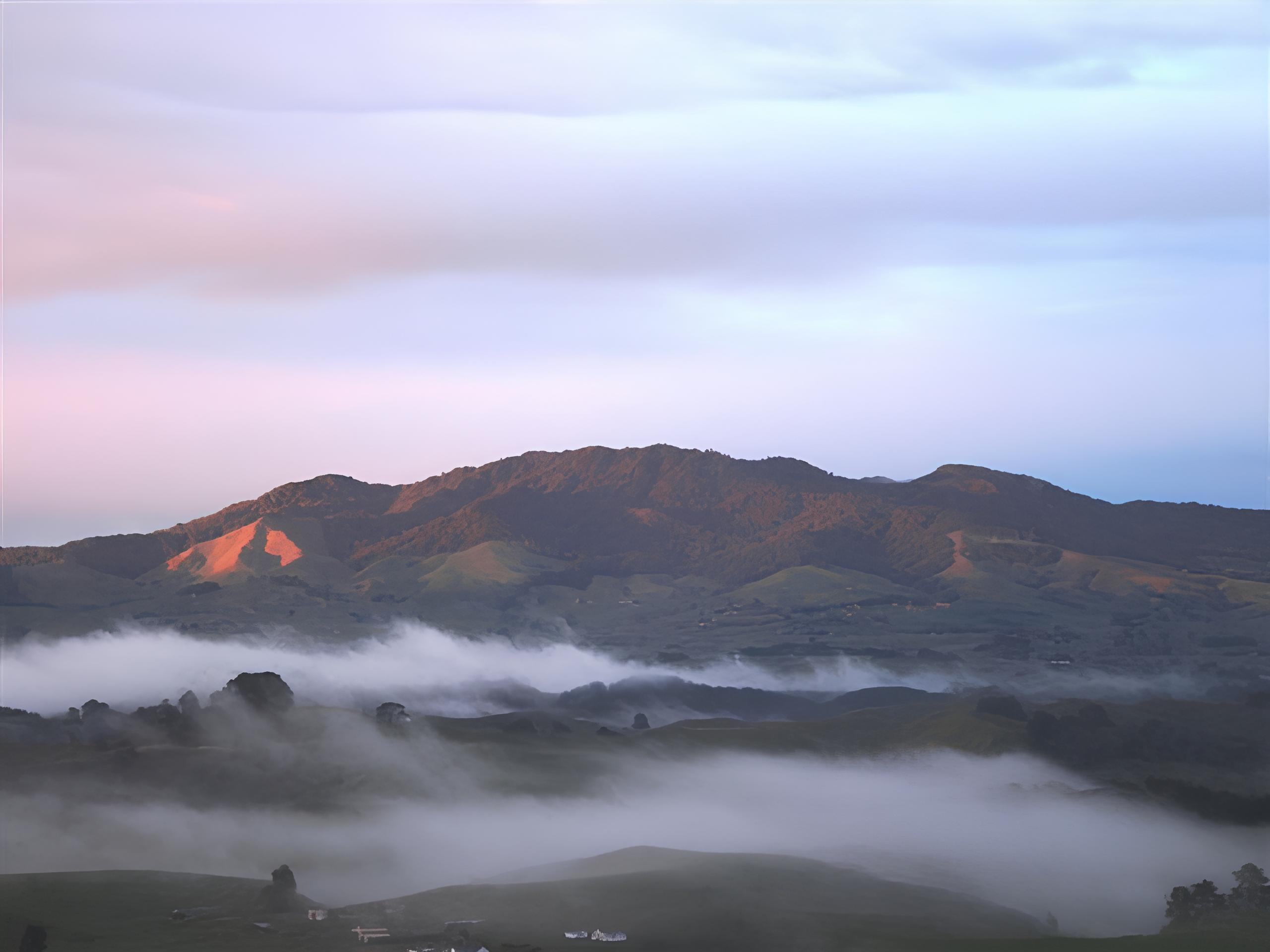
Approaching Mount Maungatautari, hikers are greeted by a landscape where ancient volcanic origins meet vibrant native forest. The mountain’s slopes are cloaked in lush greenery, a testament to the successful ecological restoration efforts that have transformed this extinct volcano into a sanctuary for New Zealand’s unique wildlife. Trekking here is not just a physical journey but an immersion into a living ecosystem, where the silence is punctuated by native birdsong and the rustle of leaves. The contrast between the mountain’s volcanic past and its thriving present creates a profound sense of connection to the land’s geological and ecological history. Reaching the summit or exploring the predator-free enclosures offers a rewarding encounter with nature’s resilience and the raw beauty of New Zealand’s volcanic landscapes.

Geological Background of Mount Maungatautari
Mount Maungatautari is an extinct stratovolcano that formed approximately 1.8 million years ago during the volcanic activity that shaped much of New Zealand’s North Island. Its volcanic structure is characterized by eroded slopes and a peak rising to 797 meters above sea level. Over millennia, erosion has softened its volcanic features, leaving a landscape dominated by native forest rather than exposed lava or ash fields. The mountain’s volcanic soils have contributed to the rich biodiversity that now flourishes here. While no recent eruptions have occurred, the mountain’s geological history is evident in its terrain and soil composition. The presence of ancient volcanic minerals supports a diverse range of plant species, some of which are rare or endemic. Maungatautari’s volcanic past underpins its current role as a vital ecological sanctuary, linking geology with conservation.
Terrain and Hiking Experience on Mount Maungatautari
Hiking Mount Maungatautari offers a varied terrain that reflects both its volcanic origins and its current status as a protected ecological reserve. The trails wind through dense native forest, featuring towering trees such as tawa, rimu, and rewarewa, with a rich understory of ferns and shrubs. The terrain is predominantly soft forest floor with some sections of volcanic soil and gentle slopes, making the hiking experience accessible yet engaging. The Southern Enclosure provides family-friendly walks ranging from 30 minutes to two hours, with well-maintained paths that include boardwalks and gentle inclines. These trails offer excellent birdwatching opportunities and close encounters with native fauna, including kaka and tuatara. For more experienced hikers, the Over the Mountain Track presents a challenging 5 to 6-hour trek that ascends to Pukeatua Peak, the mountain’s summit. This route involves steeper climbs, uneven ground, and occasional muddy patches, requiring good fitness and preparation. The predator-proof fence that encircles the sanctuary adds a unique element, as hikers pass through double-door gates that mark entry into a protected ecological island. Weather conditions can vary, with cooler temperatures and stronger winds near the summit, so layered clothing is advisable. Overall, the hiking experience combines the tranquility of ancient forest with the thrill of exploring a volcanic landscape reborn through conservation.
What Makes the Mount Maungatautari Trek Unique
Mount Maungatautari stands out as a volcano trekking destination not for active lava flows or dramatic eruptions, but for its pioneering ecological restoration and conservation efforts. Encircled by one of the world’s longest predator-proof fences, the mountain functions as a mainland ecological island, safeguarding native species that have vanished elsewhere due to introduced predators. This sanctuary hosts endangered birds like the kaka and kokako, ancient reptiles such as tuatara, and rare frogs, offering hikers a rare chance to witness New Zealand’s indigenous wildlife thriving in their natural habitat. The combination of volcanic terrain and dense native forest creates a diverse landscape that is both geologically and biologically fascinating. Guided day and night walks reveal the forest’s secrets, from glowworms to native crayfish, enriching the trekking experience with wildlife encounters. The sanctuary’s commitment to conservation, community involvement, and education makes every step on Maungatautari a journey through both natural history and modern ecological achievement.
The Summit and Crater Experience on Mount Maungatautari
Reaching the summit of Mount Maungatautari at Pukeatua Peak rewards hikers with expansive views over the Waikato Region’s rolling hills and patchwork farmland. Unlike active volcanoes, Maungatautari’s summit is peaceful and cloaked in native forest rather than volcanic crater features. The absence of a visible crater rim reflects its extinct status and long geological dormancy. Instead, the summit offers a serene vantage point to appreciate the scale of the ecological sanctuary below and the surrounding volcanic landscape. The air is fresh and often cool, carrying the scent of native trees and earth. From here, hikers can reflect on the mountain’s transformation from a volcanic peak to a thriving wildlife refuge. The summit experience is contemplative and grounding, emphasizing nature’s resilience and the ongoing story of conservation.
Best Time to Trek Mount Maungatautari
The optimal time to hike Mount Maungatautari is during New Zealand’s summer months, from December through February, when weather conditions are warm and stable. During this period, temperatures typically range from 15°C to 25°C, providing comfortable hiking conditions. The summer season also coincides with increased bird activity and vibrant forest growth, enhancing wildlife viewing opportunities. Spring and autumn offer cooler temperatures and fewer visitors, which may appeal to those seeking a quieter experience, but weather can be more variable with occasional rain and muddy trails. Winter months are colder and wetter, with temperatures dropping to around 10°C, and some tracks may become slippery or less accessible. Visitors should check weather forecasts and sanctuary opening times before planning their trek. Booking in advance is recommended, especially during peak season, as visitor numbers are limited to protect the sanctuary’s delicate ecosystem.
Trekking Routes and Trail Options at Mount Maungatautari
Mount Maungatautari offers a variety of trekking routes catering to different fitness levels and interests. The most popular area is the Southern Enclosure (Te Tuia a Tāne), featuring five walks ranging from 30 minutes to two hours. These family-friendly trails meander through native forest, providing excellent birdwatching and educational signage. Highlights include the bird feeding area, weta boxes, and the Canopy Tower, which rises 16 meters above the forest floor for panoramic views. Guided tours are available here, including night walks to experience glowworms and nocturnal wildlife. The Northern Enclosure offers shorter walks of 30 to 60 minutes, showcasing regenerating forest and streams, including the 1.1 km Te Ara Tirohia Loop Track. For experienced trampers, the Over the Mountain Track is a demanding 5 to 6-hour trek that traverses the mountain from north to south, ascending to Pukeatua Peak. This route involves steeper terrain and requires good preparation and navigation skills. Entry points are located on the north side via Hicks Road and the south side via Tari Road, with the southern entrance featuring a visitor center and a day pass fee. The northern access is free but more basic. Visitors can choose guided or self-guided options depending on their preference and experience.
Difficulty Assessment of Mount Maungatautari Treks
Mount Maungatautari’s hiking difficulty ranges from easy family walks to moderate mountain treks. The Southern Enclosure trails are suitable for beginners and families, featuring well-maintained paths with gentle gradients and minimal technical challenges. These walks are accessible to most fitness levels and provide a comfortable introduction to the sanctuary’s environment. The Over the Mountain Track, however, is classified as a moderate volcano trek. It involves sustained uphill sections, uneven terrain, and potential muddy patches, requiring a reasonable level of fitness, sturdy footwear, and some hiking experience. Altitude is modest at 797 meters, so altitude sickness is not a concern. Weather conditions can affect trail difficulty, with rain increasing slipperiness. No technical climbing or mountaineering skills are needed, but hikers should be prepared for changing conditions and carry adequate supplies. Overall, the mountain offers rewarding trekking options for a broad range of adventurers.
Essential Gear for Trekking Mount Maungatautari
When trekking Mount Maungatautari, appropriate gear enhances safety and comfort. Essential items include sturdy hiking boots with good grip to navigate forest trails and occasional muddy sections. Trekking poles can aid balance on uneven terrain and reduce fatigue on ascents and descents. Layered clothing is recommended to adapt to temperature changes, including a windproof and waterproof jacket for sudden weather shifts. Sun protection such as a hat, sunglasses, and sunscreen is important due to limited shade in some areas. A headlamp or flashlight is necessary for guided night walks or early starts. Carry sufficient water and snacks to stay hydrated and energized during longer treks. A small first aid kit and insect repellent are advisable. While volcanic gases are not a concern here, a camera or binoculars will enrich wildlife and landscape viewing. Maps or GPS devices are useful for the longer Over the Mountain Track, especially for self-guided hikers.
Safety and Volcanic Hazards at Mount Maungatautari
Mount Maungatautari is an extinct volcano, so volcanic hazards such as eruptions, lava flows, or toxic gases are not present. However, safety considerations focus on typical hiking risks and ecological protection. Trails can be slippery when wet, and uneven terrain requires careful footing to avoid falls or twisted ankles. The predator-proof fence includes double-door gates that must be securely closed to maintain the sanctuary’s integrity; visitors should follow all signage and instructions. Wildlife encounters are generally safe but should be respectful and non-intrusive to protect native species. Weather can change rapidly, so hikers should be prepared for wind, rain, and cooler temperatures at higher elevations. Emergency services are accessible via the visitor center at the southern entrance. The sanctuary is monitored by conservation staff who provide guidance and ensure visitor safety. Overall, trekking here is low risk but requires standard outdoor precautions.
Permits, Guides, and Logistics for Visiting Mount Maungatautari
Visiting Mount Maungatautari requires a day pass for access to the Southern Enclosure, which can be purchased online or at the visitor center located at the south entrance on Tari Road. The sanctuary limits visitors to 300 per day to protect its delicate ecosystem, so advance booking is strongly recommended to avoid disappointment. Entry to the Northern Enclosure is free but offers a more basic experience without facilities. Guided tours are offered by Sanctuary Mountain Maungatautari, providing expert insights into the mountain’s ecological restoration, native wildlife, and cultural history. These include daytime walks, birdwatching tours, and unique night-time experiences to observe glowworms and nocturnal species. Local eco-tourism operators such as WaikatoNZ and GetYourGuide also offer packages that include transportation, guided hikes, and educational components. The sanctuary is accessible by car from Cambridge, approximately a 20-minute drive via Mangatautari Road to Hicks Road (north side) or Tari Road (south side). Parking is available at both entrances. Visitors should plan for variable weather and bring suitable gear. The sanctuary’s website provides detailed trail maps, safety information, and booking options. Public transport options are limited, so private vehicle or tour operator transport is recommended. Overall, the logistics are straightforward but require planning to ensure a smooth and rewarding visit.
Where to Stay Near Mount Maungatautari
Accommodation options near Mount Maungatautari cater to a range of preferences and budgets, with the nearby town of Cambridge serving as the primary base for visitors. Cambridge, located approximately 20 minutes by car from the sanctuary entrances, offers a variety of lodging including boutique hotels, bed and breakfasts, and motels. Notable accommodations include the Cambridge Hotel, known for its comfortable rooms and central location, and the historic Gables Motor Lodge offering convenient access to local amenities. For those seeking a more nature-immersed stay, eco-lodges and holiday parks are available in the wider Waikato Region. The Waitomo Caves area, about an hour’s drive away, provides additional options such as the Waitomo Caves Guest Lodge, featuring comfortable rooms and a restaurant, ideal for combining cave exploration with volcano trekking. Putāruru town, also within a 30-minute drive, offers budget-friendly accommodations like Kaimai Sunset Bed & Breakfast and Okoroire Hot Springs Hotel, which provide access to outdoor activities and relaxation. Many lodgings offer amenities such as free Wi-Fi, parking, and dining options. Visitors are advised to book in advance, especially during peak summer months, to secure preferred accommodations. Staying in Cambridge or nearby towns allows easy access to the sanctuary, local dining, and transport links to Hamilton and Auckland airports.