

Monte Trigo Volcano Trekking Guide: Conquer Cape Verde’s Remote Stratovolcano on Santo Antão Island
Explore the demanding trek to Monte Trigo, a dormant stratovolcano on Cape Verde’s Santo Antão Island. This guide covers the rugged terrain, geological background, trekking routes, safety tips, and local accommodations for an unforgettable volcanic adventure.
Quick Volcano Snapshot
| Attribute | Value |
|---|---|
| Volcano type | Stratovolcano |
| Elevation | Approx. 800 meters |
| Location | Santo Antão Island, Cape Verde |
| Activity status | Dormant |
| Trekking difficulty | Demanding |
| Typical trek duration | 4-5 hours (Tarrafal to Monte Trigo) |
| Altitude gain | Approx. 400-600 meters |
| Terrain type | Rugged volcanic rock, cobblestone paths, cliff-edge trails |
| Best season | November to June (dry season) |
| Temperature range | 20°C to 30°C |
| Permit requirement | No formal permits required |
Introduction: The Experience of Hiking Monte Trigo Volcano
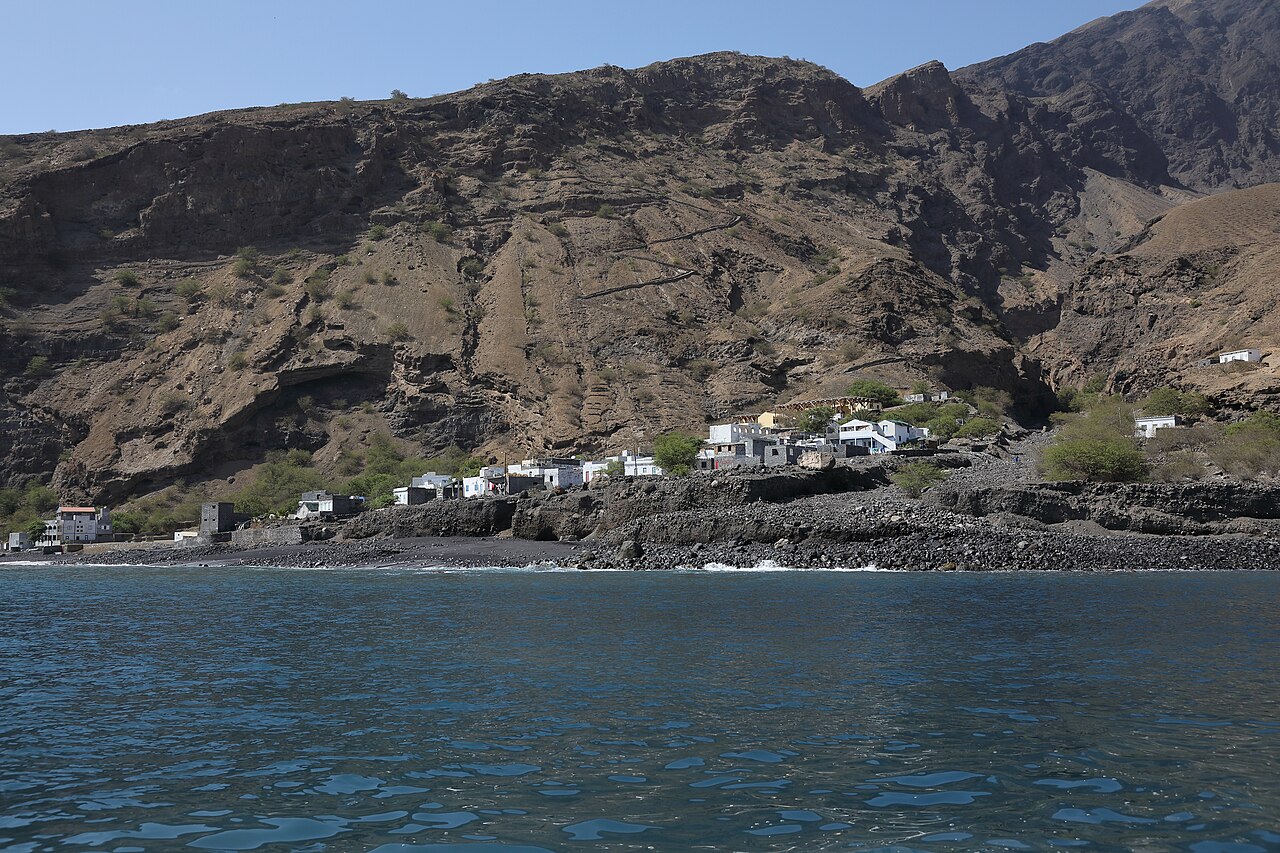
Approaching Monte Trigo, the remote volcanic peak on Santo Antão Island, feels like stepping into a raw, untouched world. The trail winds through stark volcanic landscapes, where rugged cliffs meet the vast Atlantic Ocean. The contrast between the barren lava terrain and the deep blue sea creates a dramatic backdrop. As you ascend, the silence deepens, broken only by the wind and distant waves. Reaching the crater rim offers a profound sense of geological power and solitude, a rare reward for those who brave this demanding trek.
The Volcano Itself: Geological Background
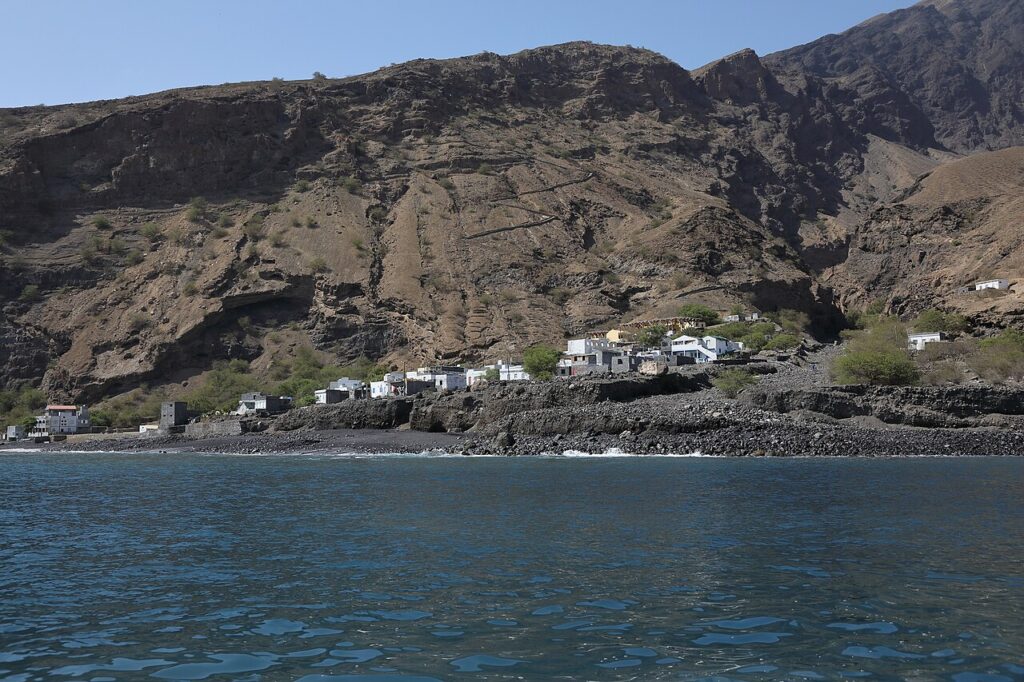
Monte Trigo is a dormant stratovolcano located on the western edge of Santo Antão Island in Cape Verde. Formed through successive eruptions of viscous lava and ash, this volcano has shaped the island’s rugged topography. Its volcanic cone rises sharply from the coastline, creating steep cliffs and deep valleys. The volcano’s last known activity dates back thousands of years, leaving behind solidified lava flows and volcanic minerals that color the landscape in shades of black and ochre. Fumaroles and steam vents are absent today, but the geological formations tell a story of intense volcanic forces that once sculpted this remote region.
The Volcano Trek: Terrain and Hiking Experience
The trek to Monte Trigo is a challenging journey through some of Cape Verde’s most rugged volcanic terrain. Starting from the village of Tarrafal, the path initially follows a cobblestone route that is relatively gentle, winding through small settlements and patches of arid vegetation. As the trail progresses, hikers encounter steep ascents and descents along narrow cliff-edge paths that demand careful footing and sure balance. The terrain varies from loose volcanic scree and jagged lava rock to compacted cobblestones, requiring sturdy hiking boots with excellent grip.
Midway through the hike, the trail becomes more exposed, with dramatic drops to the Atlantic Ocean below. Wind conditions can be strong and unpredictable, adding to the physical challenge. The path also crosses dried riverbeds and canyon-like formations carved by seasonal rains, where footing can be uneven and slippery. Altitude gain is moderate but combined with the rugged terrain, it makes the trek demanding even for experienced hikers.
The volcanic landscape is stark and beautiful, with minimal vegetation and expansive views of the surrounding ocean and the towering Topo de Coroa volcano to the northeast. The trail’s isolation means hikers must be self-sufficient, carrying ample water and supplies. The final approach to Monte Trigo village descends through volcanic rock formations to a small fishing community nestled between the sea and the volcanic slopes. Overall, the hike offers a raw and immersive experience into Cape Verde’s volcanic wilderness, blending physical challenge with spectacular natural scenery.
What Makes This Volcano Trek Unique
Monte Trigo’s trek stands out for its remote location and the dramatic meeting of volcanic landscapes with the Atlantic coastline. Unlike more frequented volcanoes, this trail offers solitude and a sense of discovery. The rugged cliffs and narrow paths hugging the ocean provide breathtaking views rarely found on other volcanic hikes. The village of Monte Trigo itself is a hidden gem, accessible only by foot or boat, preserving a traditional way of life that feels untouched by modern tourism. The combination of volcanic geology, coastal vistas, and cultural isolation makes this trek a truly unique adventure.
The Summit and Crater Experience
Reaching the summit area near Monte Trigo, hikers are rewarded with panoramic views of the Atlantic Ocean stretching to the horizon and the rugged volcanic peaks of Santo Antão. The crater itself is not a classic deep volcanic crater but rather the remains of an ancient volcanic cone, with rocky outcrops and eroded slopes. The air carries a faint scent of earth and salt from the nearby sea. The silence is profound, broken only by the wind and distant bird calls. Standing here, one feels the immense geological forces that shaped this island and the timeless solitude of this remote volcanic landscape.
Best Time to Trek Monte Trigo Volcano
The ideal trekking season for Monte Trigo is during the dry months from November to June. During this period, rainfall is minimal, and humidity is lower, making the trail safer and more comfortable. Avoid hiking between July and October when the region experiences increased humidity and sporadic heavy rains, which can make the paths slippery and dangerous. Early morning starts are recommended to avoid the intense midday sun and heat, especially given the exposed nature of the trail. Weather conditions can change rapidly near the coast, so hikers should be prepared for wind and cooler temperatures at higher elevations.
Trekking Routes and Trail Options
The primary route to Monte Trigo begins in the village of Tarrafal on Santo Antão’s western coast. This trail covers approximately 7 to 9 kilometers and typically takes 4 to 5 hours to complete, depending on fitness and pace. The route follows a cobblestone path initially, then transitions to rugged volcanic terrain with steep ascents and descents along cliff edges.
There are no alternative official trails to Monte Trigo due to its remote location and the island’s rugged topography. The path is mostly linear, connecting Tarrafal to Monte Trigo village. Some hikers choose to extend their adventure by combining this trek with other Santo Antão routes, such as the trail from Seladinha to Praia or exploring the volcanic peaks around Topo de Coroa.
Guided options are available through local tour operators who provide transportation to Tarrafal, experienced guides familiar with the terrain, and logistical support including boat transfers back from Monte Trigo. Self-guided hikers should be well-prepared with GPS tracks and sufficient supplies, as the trail is isolated and not regularly maintained.
Difficulty Assessment
Monte Trigo’s trek is classified as demanding due to its rugged terrain, exposure, and physical challenges. The trail includes steep ascents and descents on loose volcanic scree and uneven cobblestone paths. Hikers must be comfortable with narrow cliff-edge sections and variable footing. Altitude is moderate but combined with the terrain, it requires good cardiovascular fitness and sure-footedness.
This trek is not suitable for beginners or those with limited hiking experience. No technical climbing skills are required, but endurance, balance, and preparation for changing weather conditions are essential. The remote nature of the trail means hikers should be self-reliant and cautious.
Essential Volcano Trekking Gear
For trekking Monte Trigo, essential gear includes sturdy hiking boots with excellent grip to handle volcanic rock and scree. Trekking poles are highly recommended to aid balance on uneven terrain. Given the exposed trail, a windproof jacket and sun protection such as a wide-brimmed hat, sunglasses, and high SPF sunscreen are necessary. Carrying at least 2 liters of water per person is critical due to the lack of water sources along the route.
A headlamp is useful for early starts or late finishes. Lightweight, breathable clothing is advised, along with a small first aid kit. While volcanic gases are minimal due to the dormant status, a dust mask or gaiters can help protect against volcanic ash or dust on windy days. GPS device or smartphone with offline maps is recommended for navigation.
Safety and Volcanic Hazards
Monte Trigo is a dormant volcano with no recent eruptive activity, so volcanic hazards such as lava flows or gas emissions are minimal. However, the trail’s safety challenges stem from the rugged terrain and exposure. Narrow paths along steep cliffs pose risks of falls, and loose volcanic scree can cause slips. Weather can change quickly, with strong coastal winds increasing the risk of losing balance.
Hikers should stay on marked paths and avoid the edges of unstable slopes. There is no formal volcanic monitoring station at Monte Trigo, so awareness of weather conditions and local advice is essential. Emergency services are limited due to the area’s remoteness, so carrying a communication device and informing someone of your itinerary is prudent.
Permits, Guides, and Logistics
No formal permits are required to hike Monte Trigo, but the trek’s remote and demanding nature means that hiring a local guide is highly recommended for safety and navigation. Several reputable tour operators specialize in Cape Verde trekking and offer guided trips to Monte Trigo, including Hiking Trekking Tours Cape Verde, Bu Country Tours, Adventrips CV, and Travel O Cape Verde. These companies provide comprehensive packages that include transportation to Tarrafal, experienced guides, and logistical support such as boat transfers from Monte Trigo back to Tarrafal.
Guided tours typically last one to two days, with options to combine the Monte Trigo trek with other Santo Antão hiking routes. Costs vary depending on the length and inclusions but generally range from $100 to $300 per person for guided day hikes. Self-guided hikers should prepare by downloading GPS tracks from sources like Wikiloc and carrying sufficient water and supplies, as there are no facilities along the trail.
Access to Tarrafal is by road from Porto Novo, the island’s main town, which is reachable by ferry from São Vicente Island. Monte Trigo village is only accessible by foot or boat, with local fishermen providing boat transfers. Accommodation options in Monte Trigo are limited, so many hikers stay in Tarrafal or Porto Novo before and after the trek. Planning logistics carefully is essential due to the area’s isolation and limited infrastructure.
Where to Stay Near Monte Trigo Volcano
Accommodation options near Monte Trigo are sparse due to the village’s remote location. Most trekkers base themselves in the nearby village of Tarrafal, which offers a few guesthouses and small hotels such as Casa Praia Tarrafal de Monte Trigo. This guesthouse provides basic amenities including Wi-Fi, terraces with ocean views, and proximity to the trailhead. Tarrafal’s calm atmosphere and local eateries make it a comfortable base for preparing for the trek.
For those seeking more options, Porto Novo, about 30 kilometers east of Tarrafal, is the island’s main town and offers a wider range of accommodations including guesthouses like Casa Manuel & Elvira and Vista Tarrafal Guest House. Porto Novo is accessible by road and ferry and provides restaurants, shops, and transport connections.
Monte Trigo village itself has very limited lodging, mostly small family-run guesthouses with basic facilities. Due to its isolation, many hikers opt to return to Tarrafal by boat after the trek rather than staying overnight in Monte Trigo. Planning accommodations in Tarrafal or Porto Novo ensures better comfort and access to services while still allowing early starts for the trek.

