
Trekking Cova Volcano: Exploring Cape Verde’s Majestic Caldera on Santo Antão Island
Discover the unique trekking experience of Cova Volcano on Santo Antão Island, Cape Verde. This dormant caldera offers moderate hiking through fertile volcanic landscapes, lush valleys, and panoramic ocean views. Explore the geological wonders, diverse terrain, and local culture on this unforgettable volcano trek.
Quick Volcano Snapshot
| Attribute | Value |
|---|---|
| Volcano type | Caldera |
| Elevation | 1100 meters |
| Location | Santo Antão Island, Cape Verde |
| Activity status | Dormant |
| Trekking difficulty | Moderate |
| Typical trek duration | 3 to 6 hours |
| Altitude gain | Approximately 750 meters |
| Terrain type | Cobblestone paths, dirt trails, volcanic soil, fertile agricultural fields |
| Best season | October to May |
| Temperature range | 16°C to 23°C |
| Permit requirement | No formal permit required |
The Experience of Hiking Cova Volcano
Approaching Cova Volcano on Santo Antão Island, hikers are greeted by a vast caldera rimmed by steep slopes and lush vegetation. The contrast between the barren volcanic crater and the fertile green valley below evokes a profound sense of geological power and natural beauty. As you ascend or descend the trail, the dramatic views of the Atlantic Ocean and the island’s rugged terrain unfold, immersing you in a landscape shaped by ancient volcanic forces. Reaching the crater’s edge offers an emotional climax, where the vastness of the caldera and the vibrant agricultural fields within reveal the volcano’s enduring influence on the island’s ecosystem.
Geological Background of Cova Volcano
Cova Volcano is a large volcanic caldera located on Santo Antão Island, part of the Cape Verde archipelago off West Africa. This dormant volcano formed through a massive collapse of the volcanic cone, creating a broad, circular depression approximately 1,100 meters above sea level. The caldera’s fertile soils support diverse vegetation and agriculture, a unique microclimate within the crater fosters lush plantations of sugar cane, bananas, and tropical fruits. Geological features include ancient lava flows, volcanic ash deposits, and remnants of fumaroles that once vented gases. The volcano’s formation is linked to the island’s volcanic activity millions of years ago, shaping the dramatic landscapes that attract hikers and geologists alike.
Terrain and Hiking Experience on Cova Volcano
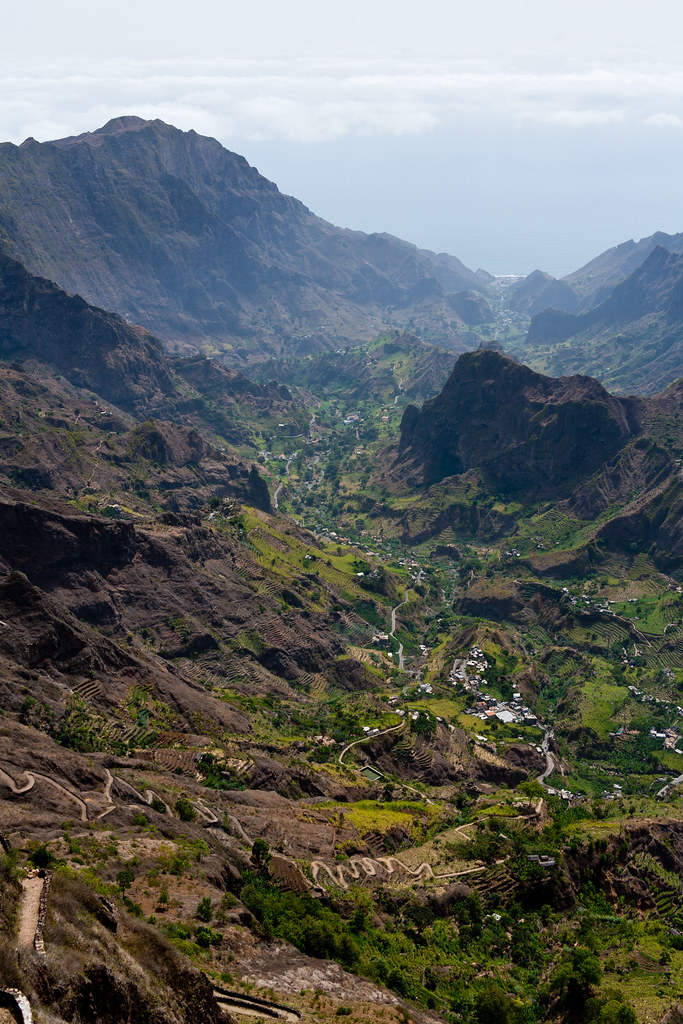
The trek around and down Cova Volcano offers a varied and engaging hiking experience characterized by a mix of cobblestone paths, dirt trails, and volcanic soil terrain. The ascent from Cabo da Ribeira to the crater rim involves a steady climb of approximately 750 meters, with the trail mostly paved with cobblestones and dirt, making it manageable but physically demanding. Hikers encounter uneven surfaces and occasional steep sections, which can be slippery when wet, though the region’s dry climate minimizes this risk for most of the year. The trail winds through a landscape that transitions from sparse volcanic rock and ash slopes near the crater rim to fertile agricultural terraces within the caldera, where banana, sugar cane, and tropical fruit plantations flourish. Along the descent, trekkers navigate zigzagging stone paths that require careful footing but reward with spectacular views of the green Paul Valley below and the distant ocean horizon. The terrain’s diversity challenges hikers to adapt to changing footing and elevation, while the moderate altitude and occasional winds near the summit add to the physical demands. Overall, the hike balances accessibility with adventure, suitable for hikers with moderate fitness and experience. The presence of local guides and well-marked trails enhances safety and enriches the experience with cultural and natural insights. Photographers will find numerous vantage points for capturing the volcanic landscape’s dramatic contrasts, from the barren crater rim to the vibrant valley floor. The trail’s length and elevation gain typically require between three to six hours, depending on pace and route choice, making it an ideal day trek for volcano enthusiasts seeking both geological intrigue and scenic beauty.

What Makes the Cova Volcano Trek Unique
Cova Volcano’s trek stands out for its expansive volcanic caldera filled with fertile soils and a unique microclimate that supports lush plantations within the crater itself. Unlike many volcanic hikes that focus solely on barren lava fields, this trek offers a rare blend of volcanic geology and vibrant agriculture. The panoramic views from the crater rim encompass the vast Paul Valley and the Atlantic Ocean, creating a striking juxtaposition of land and sea. The trail’s cultural dimension, passing through local villages and traditional rum distilleries, adds depth to the experience, connecting hikers with the island’s heritage. The combination of geological grandeur, ecological diversity, and cultural encounters makes this trek a distinctive adventure in Cape Verde.
Summit and Crater Experience at Cova Volcano
Reaching the rim of Cova Volcano’s caldera is a moment of awe and reflection. The expansive crater, roughly circular and lush with vegetation, contrasts with the stark volcanic rock that forms its edges. From this vantage point, hikers witness sweeping views of the verdant Paul Valley stretching down to the ocean, framed by the island’s rugged peaks. The air carries the faint scent of earth and vegetation, while the quiet is punctuated only by the wind and distant bird calls. The crater’s interior, a patchwork of cultivated fields and natural flora, reveals the volcano’s role in sustaining local life. Standing on the rim, one senses the immense geological forces that shaped this landscape, a humbling reminder of Earth’s dynamic nature.

Best Time to Trek Cova Volcano
The optimal trekking season for Cova Volcano spans from October to May, coinciding with Cape Verde’s dry season. During these months, the weather is generally mild and stable, with temperatures ranging from 16°C to 23°C, ideal for hiking. Avoid the rainy season from July to October, when humidity and sporadic showers can make trails slippery and less enjoyable. Early mornings offer cooler temperatures and clearer skies, enhancing visibility and photographic opportunities. Seasonal winds from December to March can be strong near the crater rim, so hikers should prepare accordingly. Planning treks outside the rainy season ensures safer trail conditions and a more comfortable experience.
Routes and Trail Options for Cova Volcano Trek
The primary trekking route begins at Cabo da Ribeira, ascending approximately 750 meters to the rim of Cova Volcano’s caldera. This uphill path follows a combination of cobblestone and dirt trails, winding through rural landscapes and offering intermittent views of the surrounding valleys. The ascent typically takes around three hours, depending on fitness and pace. From the crater rim, hikers can choose to descend into the fertile Paul Valley via a zigzagging stone path that leads through lush plantations of bananas, sugar cane, and tropical fruits. This descent takes approximately three to four hours and culminates near the village of Ribeira Paúl. Alternatively, some trekkers prefer to start at the crater rim and hike downhill to Ribeira Paúl, then arrange transport back to the starting point. Guided tours often include transportation from Porto Novo or Mindelo to the trailhead, enhancing convenience. The trails are well-maintained and marked, with local guides available to enrich the experience with insights into the geology, flora, and local culture. For those seeking a longer adventure, the Cova Volcano trek can be combined with adjacent trails exploring Santo Antão’s mountainous terrain and coastal villages, creating multi-day hiking itineraries.

Difficulty Assessment of the Cova Volcano Trek
The Cova Volcano trek is classified as a moderate volcano trek. The primary challenges include a sustained elevation gain of approximately 750 meters on uneven cobblestone and dirt paths. While technical climbing skills are not required, hikers should be prepared for steep sections and variable terrain that demands good balance and stamina. Altitude is moderate, so altitude sickness is generally not a concern, but the physical exertion can be significant for those unaccustomed to hiking. The trail’s condition and the dry climate reduce risks associated with slippery surfaces, though caution is advised during rare wet weather. Overall, the trek suits hikers with a reasonable level of fitness and some prior hiking experience. Proper preparation and pacing ensure an enjoyable and rewarding ascent and descent.
Essential Gear for Trekking Cova Volcano
Hikers should equip themselves with sturdy hiking boots featuring good grip to navigate cobblestone and dirt trails safely. Trekking poles are recommended to assist with balance and reduce strain on knees during ascent and descent. Given the exposed terrain and limited shade, sun protection including a wide-brimmed hat, sunglasses, and high-SPF sunscreen is essential. A lightweight windproof jacket is advisable for cooler temperatures and occasional winds near the crater rim. Carry sufficient water to stay hydrated throughout the 3 to 6-hour trek, as water sources along the trail are scarce. A small backpack to hold personal items, snacks, and a camera is practical. For early morning or late afternoon hikes, a headlamp or flashlight is useful. While volcanic gases are minimal due to the volcano’s dormant status, sensitive individuals may consider a light face mask. Finally, bring a basic first aid kit and insect repellent to address minor injuries and insect encounters.
Safety and Volcanic Hazards on Cova Volcano
Cova Volcano is dormant, significantly reducing risks associated with volcanic activity such as eruptions or toxic gas emissions. However, hikers should remain vigilant of natural hazards including unstable or loose rocks on trail sections, especially near the crater rim. The cobblestone paths can be uneven and slippery when wet, so appropriate footwear and careful footing are essential. Sudden weather changes, including strong winds and fog, can impair visibility and increase exposure, particularly at higher elevations. It is advisable to check weather forecasts and avoid hiking during adverse conditions. Local authorities and guides monitor the area and provide safety information. Emergency services are limited on Santo Antão, so hikers should carry communication devices and inform others of their itinerary. Respecting trail markers and staying on established paths minimizes environmental impact and enhances safety.
Permits, Guides, and Logistics for Trekking Cova Volcano
No formal permits are required to hike Cova Volcano, making it accessible for independent trekkers. However, hiring a local guide is highly recommended to enhance safety, provide cultural and geological insights, and support the local economy. Several reputable tour operators offer guided hikes and full-day tours, including Soda de Tour, Walking Cape Verde, Evendo Tours, and Marriott Bonvoy Tours. These operators typically provide transportation from Porto Novo or Mindelo to the trailhead, guiding services, and sometimes include visits to local rum distilleries and villages along the route. Guided tours range in duration from three to six hours and accommodate various fitness levels. Costs vary depending on the operator and services included but generally range from moderate to premium pricing. Logistics on Santo Antão involve ferry transfers from São Vicente Island, with regular daily services. Accommodation and transport bookings should be arranged in advance during peak seasons. Visitors are advised to bring sufficient water and snacks, as facilities along the trail are limited. The rum production season from January to May offers unique cultural experiences during guided tours. Overall, the trekking infrastructure is well-developed, with marked trails and local support, making Cova Volcano a rewarding destination for volcano hiking enthusiasts.
Where to Stay Near Cova Volcano and Nearby Bases
Accommodations near Cova Volcano are primarily located in the towns of Porto Novo, Vila das Pombas, and Ribeira Grande on Santo Antão Island. Porto Novo serves as the main gateway to the island, offering a range of guesthouses, small hotels, and local inns suitable for budget to mid-range travelers. Vila das Pombas, situated closer to the trekking routes, features accommodations such as Hotel Paul Mar, known for its sea views, comfortable rooms, and convenient access to hiking trails. This hotel provides amenities including a restaurant, bar, and terrace, making it a popular base for trekkers. Ribeira Grande, the island’s largest town, offers additional lodging options, local restaurants, and services. For a more immersive experience, eco-lodges and guesthouses run by local families provide authentic Cape Verdean hospitality and home-cooked meals. Many accommodations offer transport arrangements to trailheads and guided tour bookings. Staying in these towns allows easy access to the ferry terminal at Porto Novo for connections to São Vicente Island. Early booking is recommended during peak hiking seasons to secure preferred lodging. Overall, the accommodation options balance comfort and local charm, supporting a convenient and enriching volcano trekking experience.