
Santorini Volcano Trail: The Ultimate Guide to Hiking Greece’s Iconic Volcanic Landscape
Explore the Santorini Volcano Trail, a moderate volcanic trek connecting stunning caldera cliffs, traditional villages, and geothermal wonders. This guide covers geology, terrain, routes, permits, gear, safety, accommodations, and expert tips for an unforgettable volcano hiking adventure in Santorini, Greece.
Quick Volcano Snapshot
| Attribute | Value |
|---|---|
| Volcano type | Complex volcano |
| Elevation | 567 m |
| Location | Santorini, Greece |
| Activity status | Dormant |
| Trekking difficulty | Moderate |
| Typical trek duration | 2.5 to 5 hours |
| Altitude gain | Approximately 300 m |
| Terrain type | Volcanic rock, ash slopes, paved and rocky trails |
| Best season | April to May, September to October |
| Temperature range | 15°C to 30°C |
| Permit requirement | Entrance fee €5 for Nea Kameni; no special permit required for trail |
The Experience of Hiking Santorini Volcano Trail
Hiking the Santorini Volcano Trail immerses you in a landscape shaped by cataclysmic volcanic forces. As you approach the trailhead in Fira, the dramatic cliffs of the caldera rise sharply, their whitewashed villages perched precariously above the deep blue Aegean Sea. The trail winds along volcanic ridges and through charming Cycladic villages, offering a vivid contrast between the stark, black volcanic rock and the vibrant Mediterranean flora. Each step brings you closer to the heart of the island’s fiery past, culminating in panoramic views from volcanic summits where steam vents and sulfurous scents remind you of the earth’s restless power. The emotional impact of standing on these ancient lava flows, gazing across the caldera, is profound—an intimate encounter with nature’s raw geological artistry.
Geological Background of Santorini Volcano
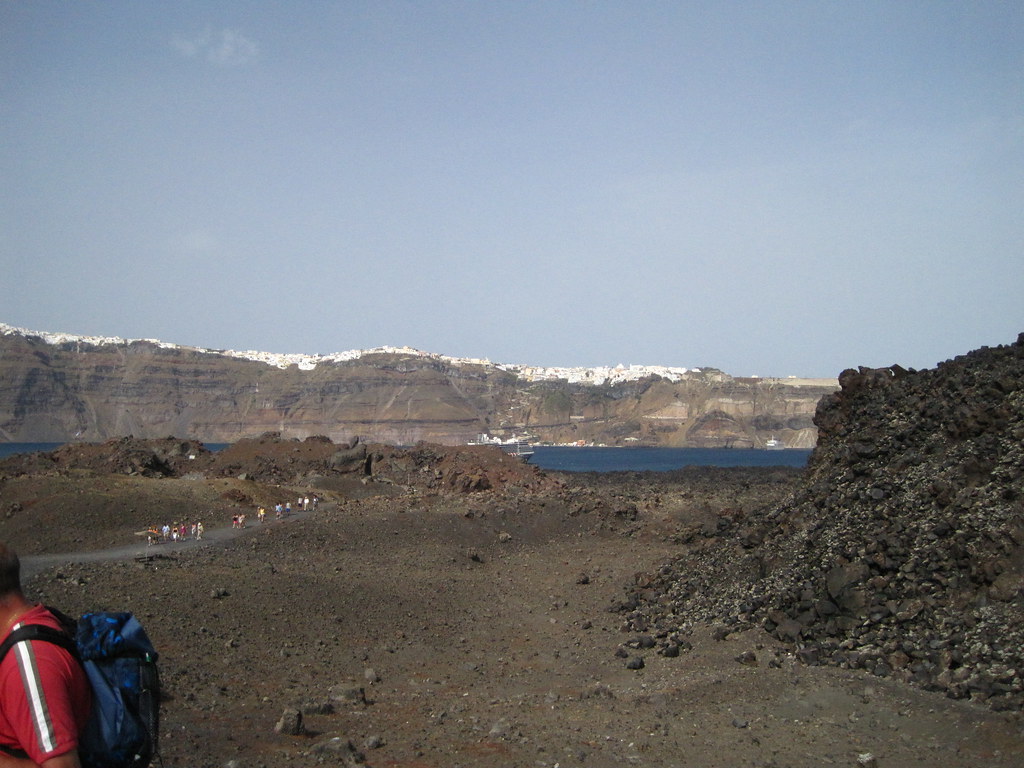
Santorini is a complex volcanic system formed by a series of overlapping shield volcanoes and calderas, the most recent of which was created approximately 3,600 years ago during the massive Minoan eruption. This eruption reshaped the island, collapsing the central part into the sea and forming the dramatic caldera cliffs visible today. The volcanic arc to which Santorini belongs results from the subduction of the African tectonic plate beneath the Eurasian plate, generating intense volcanic activity in the South Aegean region. The volcanic islands of Nea Kameni and Palea Kameni, located at the caldera’s center, are younger landmasses formed by successive eruptions between the 16th and 20th centuries. The geology features layers of lava domes, ash deposits, and pumice, with fumaroles and sulfur vents marking ongoing geothermal activity. This dynamic volcanic landscape offers a unique window into the earth’s tectonic and magmatic processes.
The Volcano Trek: Terrain and Hiking Experience
The Santorini Volcano Trail offers a diverse hiking experience that blends volcanic terrain with cultural exploration. Starting from Fira, the trail extends approximately 10 kilometers to Oia, traversing a mix of paved paths, rocky volcanic slopes, and narrow village lanes. Hikers encounter steep ascents and descents, particularly along the caldera cliffs, where footing can be uneven and requires careful attention. The volcanic substrate varies from compacted lava rock to loose pumice and ash, which can be slippery, especially on sun-exposed sections. The trail’s elevation gain is moderate, around 300 meters, but the combination of heat, wind exposure, and rugged terrain demands a reasonable level of fitness and sturdy footwear. Along the way, Mediterranean vegetation such as olive trees, wildflowers, and aromatic herbs punctuate the volcanic landscape, while panoramic views of the caldera and Aegean Sea provide constant visual rewards. The trail also passes through picturesque villages like Firostefani and Imerovigli, where traditional Cycladic architecture and local cafés offer rest points. The volcanic islands of Nea Kameni and Palea Kameni, accessible by boat tours, provide additional hiking and swimming opportunities in geothermal hot springs. Overall, the trek balances geological intrigue with cultural immersion, making it a richly rewarding adventure for volcano enthusiasts and hikers alike.
What Makes the Santorini Volcano Trek Unique
Santorini’s volcano trek stands out for its combination of geological drama and cultural charm. Unlike many volcanic hikes that focus solely on raw landscapes, this trail connects multiple volcanic features with traditional Cycladic villages perched on caldera cliffs. The trail offers unparalleled views of the submerged caldera, the volcanic islands of Nea Kameni and Palea Kameni, and the sparkling Aegean Sea. The presence of active fumaroles and sulfur vents on Nea Kameni provides a rare opportunity to witness geothermal activity on a dormant volcano. Additionally, the chance to swim in the mineral-rich hot springs of Palea Kameni adds a therapeutic and sensory dimension to the experience. The trail’s accessibility and integration with local culture—passing through villages with iconic whitewashed houses and blue-domed churches—create a unique blend of natural wonder and human history. The spectacular sunsets over the caldera, visible from multiple points along the trail, further enhance its allure.
The Summit and Crater Experience
Reaching the summit of Nea Kameni volcano is a highlight of the Santorini volcanic adventure. The ascent leads you across rugged lava fields and ash-covered slopes, culminating at the crater rim where the earth’s geothermal heartbeat is palpable. Here, steam vents hiss softly, and the air carries a faint sulfurous aroma, a reminder of the volcano’s latent power. The crater itself is a jagged expanse of black volcanic rock, cracked and scorched by recent eruptions. From this vantage point, panoramic views stretch across the caldera’s steep cliffs, the surrounding islands, and the endless blue of the Aegean Sea. The stark, lunar-like landscape contrasts sharply with the vibrant sea and sky, creating a surreal and awe-inspiring atmosphere. The summit experience is both humbling and exhilarating, offering a direct connection to the island’s fiery origins.
Best Time to Trek the Santorini Volcano
The optimal seasons for trekking the Santorini Volcano Trail are spring (April to May) and autumn (September to October). During these shoulder months, temperatures are mild, ranging from 15°C to 25°C, and the island is less crowded, allowing for a more peaceful hiking experience. Summer months can be hot, with temperatures soaring above 30°C, increasing the risk of dehydration and sun exposure on the exposed volcanic terrain. Winter is cooler and wetter, with occasional strong winds that can make hiking challenging. Early morning or late afternoon hikes are recommended to avoid midday heat and to capture the spectacular sunrise or sunset views over the caldera. It is important to check local volcanic activity updates and weather forecasts before planning your trek, as conditions can change rapidly.
Trekking Routes and Trail Options on Santorini Volcano
The primary trekking route on Santorini is the iconic Caldera Trail, which stretches approximately 10 kilometers from Fira to Oia. This trail is moderately challenging, featuring a mix of paved and rocky sections, with an elevation gain of about 300 meters. Starting in Fira, the island’s bustling capital, hikers follow the caldera rim, passing through the villages of Firostefani and Imerovigli, each offering stunning viewpoints and opportunities to rest. The trail culminates in Oia, renowned for its blue-domed churches and breathtaking sunsets. For those seeking shorter hikes, the Skaros Rock Trail near Imerovigli offers a 650-meter moderate trek with dramatic cliffside views, best enjoyed at sunrise or sunset. Another option is the Prophet Elias Trail, a 4.3-kilometer route from Pyrgos village to the highest point on the island, providing panoramic vistas of Santorini’s volcanic landscape. Additionally, boat tours to Nea Kameni and Palea Kameni islands include guided hikes to the volcanic crater and swims in hot springs, combining trekking with aquatic experiences. Guided tours are widely available for all routes, offering geological insights and logistical support, while self-guided hikers should prepare with maps and adequate gear.
Difficulty Assessment of Santorini Volcano Trek
The Santorini Volcano Trail is classified as a moderate volcano trek. The terrain includes uneven volcanic rock, loose pumice, and steep ascents and descents along the caldera cliffs. While technical climbing skills are not required, hikers should possess a reasonable level of fitness and agility to navigate rocky paths and stairs. The altitude is relatively low, peaking around 567 meters, so altitude sickness is generally not a concern. However, exposure to sun, wind, and heat on open volcanic slopes can increase physical strain. Proper footwear with good grip is essential to prevent slips on loose scree and volcanic ash. The trail is suitable for hikers with some prior experience and those comfortable with moderate physical exertion. Beginners should consider guided tours for added safety and support.
Essential Volcano Trekking Gear for Santorini
For trekking Santorini’s volcanic trails, sturdy hiking boots with excellent grip are essential to handle rocky and loose volcanic terrain. Trekking poles can provide stability on steep or uneven sections. Given the exposed nature of the trail, sun protection is critical: wide-brimmed hats, sunglasses, and high-SPF sunscreen are recommended. Lightweight, breathable clothing helps manage heat, while a windproof jacket is advisable for cooler mornings or windy conditions near the caldera rim. Carry ample water to stay hydrated, as natural water sources are scarce. A small first aid kit, snacks, and a map or GPS device enhance safety and preparedness. For visits to Nea Kameni’s steaming crater, a gas mask or respirator is generally not necessary but may be useful for sensitive individuals due to sulfur fumes. A headlamp is useful if hiking during early morning or late evening hours to catch sunrise or sunset.
Safety and Volcanic Hazards on Santorini Volcano
While Santorini’s volcano is currently dormant, residual geothermal activity presents specific hazards. Steam vents and fumaroles on Nea Kameni emit sulfurous gases that can irritate the respiratory system; hikers with asthma or sensitivities should exercise caution. The volcanic terrain includes unstable scree slopes and loose rocks, increasing the risk of slips and falls, especially on steep sections. Crater edges can be unstable and should be approached carefully, adhering to marked paths and guide instructions. Sudden weather changes, including strong winds, can affect balance and temperature comfort. Although eruptions are not expected imminently, the island is monitored continuously by the Institute of Geodynamics of the National Observatory of Athens, which issues warnings if activity increases. Visitors should stay informed through official channels and follow all safety guidelines provided by tour operators and local authorities.
Permits, Guides, and Logistics for Santorini Volcano Trek
Access to the Santorini Volcano Trail itself does not require special permits; however, a €5 entrance fee is charged for hiking on Nea Kameni island, payable upon arrival. Multiple reputable tour operators provide guided volcano hikes combined with boat transfers, including Santorini Volcano & Hot Springs Tours, Santorini Experts, GetYourGuide, and Headout. These tours typically include hotel pick-up, boat transport to Nea Kameni and Palea Kameni, a guided hike to the volcanic crater, and a swim in the hot springs. Guided tours offer valuable geological insights, safety oversight, and logistical convenience, especially for first-time visitors. Self-guided hikers can access the Caldera Trail on foot from Fira without permits but should prepare with detailed maps and appropriate gear. Public buses connect Fira with other villages along the trail, facilitating flexible start and end points. It is advisable to book tours and accommodations in advance during peak seasons. Visitors should bring water, sun protection, and sturdy footwear. Seasonal weather and volcanic monitoring updates should be checked before embarking on the trek to ensure safety.
Where to Stay and Nearby Bases for Santorini Volcano Trek
Santorini offers a wide range of accommodations ideally situated for volcano trekking, primarily in the caldera towns of Fira, Oia, and Imerovigli. Fira, the island’s capital, serves as the main gateway to the volcano trail and features numerous hotels, guesthouses, and boutique lodgings. Notable options include the Volcano View Hotel, a luxury 5-star property perched on the caldera cliffs near Fira, offering suites with private balconies overlooking the volcano and Aegean Sea. Amenities include multiple swimming pools, a restaurant with panoramic views, spa services, and shuttle buses to town centers. For travelers seeking a quieter atmosphere, Imerovigli provides peaceful accommodations with stunning sunset vistas and easy access to hiking routes. Oia, the trail’s endpoint, is famed for its iconic blue-domed churches and luxury hotels such as Canaves Oia Suites, which offers private plunge pools and unobstructed caldera views. Budget travelers can find affordable stays in Megalochori and Akrotiri villages, which combine traditional charm with proximity to hiking trails. Most accommodations provide easy access to public transport or car rentals, facilitating exploration of the volcanic landscape. Early booking is recommended during peak seasons to secure preferred lodging.