

Trekking Mount Lewotobi: A Complete Guide to Flores’ Twin Volcano Adventure
Mount Lewotobi, located in southeastern Flores, Indonesia, is a captivating twin stratovolcano offering adventurous trekkers a challenging and rewarding climb. Known for its twin peaks Lewotobi Laki-laki and Lewotobi Perempuan, this volcano combines geological intrigue with cultural significance, providing a unique trekking experience amidst active volcanic landscapes.
Quick Volcano Snapshot
| Attribute | Value |
|---|---|
| Volcano type | Stratovolcano |
| Elevation | Lewotobi Perempuan 1703 m, Lewotobi Laki-laki 1584 m |
| Location | Flores, East Nusa Tenggara, Indonesia |
| Activity status | Dormant with intermittent activity |
| Trekking difficulty | Moderate |
| Typical trek duration | 8-10 hours round trip per peak |
| Altitude gain | Approximately 1300 m from base to summit |
| Terrain type | Volcanic rock, lava flows, forest plantations, rocky gullies |
| Best season | Dry season (May to September) |
| Temperature range | 15°C to 30°C |
| Permit requirement | Permit required; local guide mandatory |
The Experience of Hiking Mount Lewotobi
Approaching Mount Lewotobi, trekkers are greeted by the imposing sight of twin volcanic peaks rising sharply from the Flores landscape. The terrain shifts dramatically from lush tropical plantations at the base to stark volcanic rock and ash near the summits. The air carries a faint sulfuric tang, a reminder of the volcano’s restless nature. Hiking here is an immersive encounter with raw geological power, where every step reveals layers of volcanic history etched into the landscape. Reaching the crater rim offers a breathtaking panorama of the surrounding islands and the Flores Sea, a reward for the physical and mental challenge of the ascent.
Geological Background of Mount Lewotobi
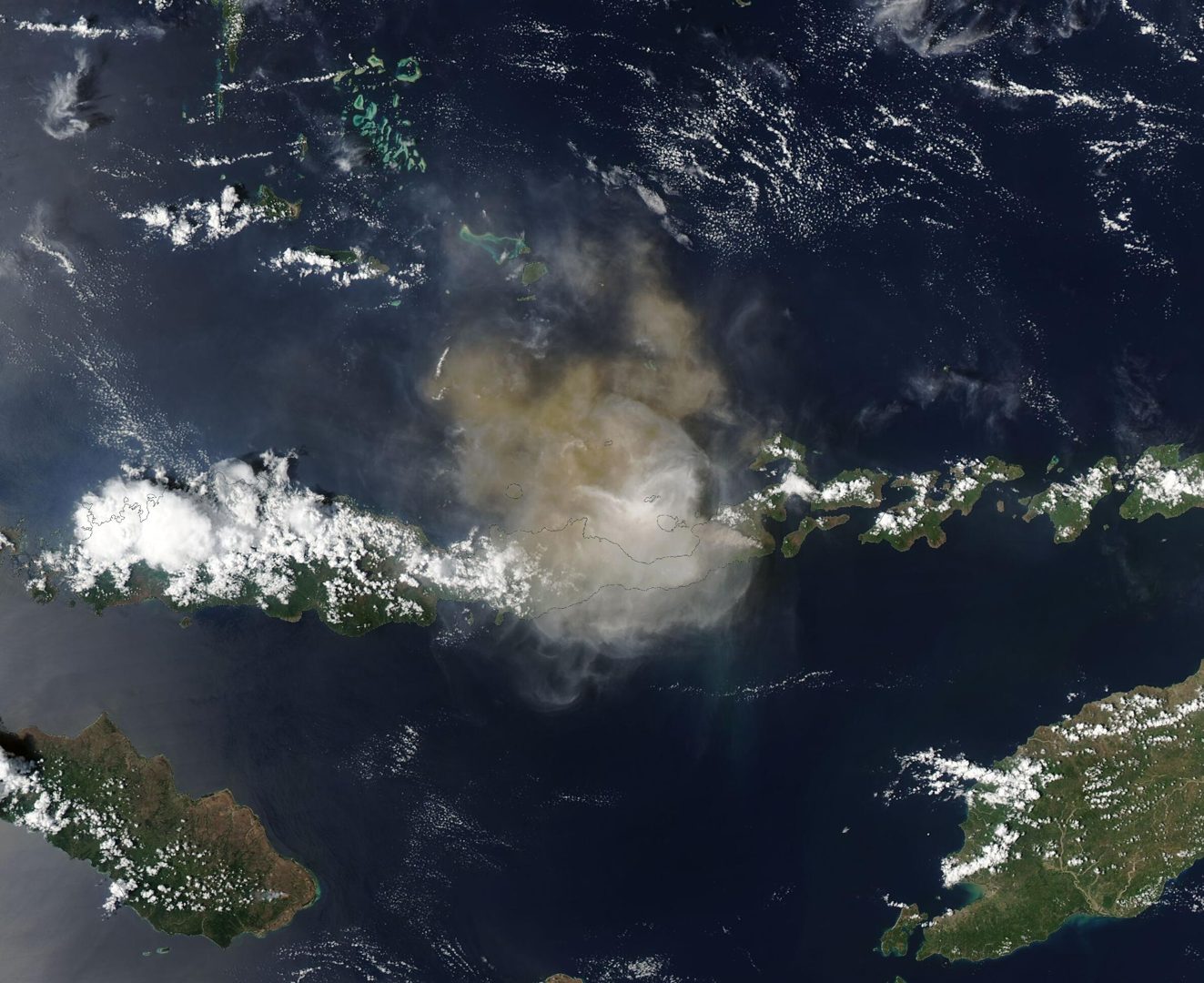
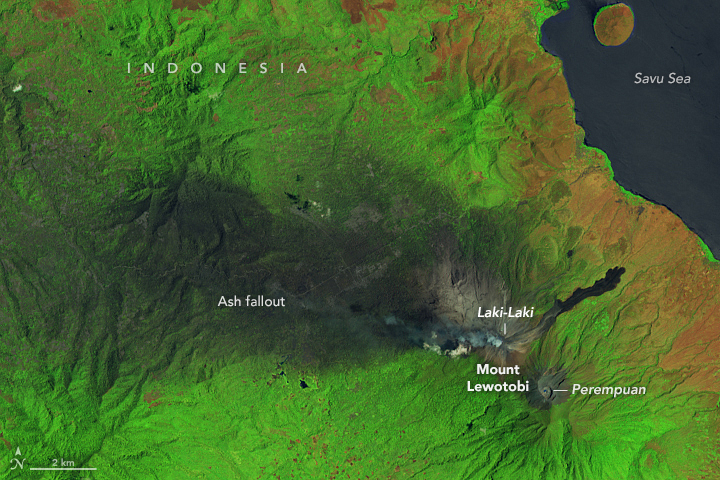
Mount Lewotobi is a classic twin stratovolcano located at the eastern end of Flores Island, Indonesia. It consists of two main peaks: Lewotobi Laki-laki (Male) at 1584 meters and Lewotobi Perempuan (Female) at 1703 meters, separated by a 2 km saddle. These volcanoes formed through successive layers of lava flows, ash, and volcanic debris, typical of stratovolcanoes. The region lies on the volcanic arc created by the subduction of the Indo-Australian Plate beneath the Eurasian Plate, making it seismically active. Lewotobi Laki-laki has been more frequently active historically, with eruptions producing ash plumes, lava bombs, and lava domes. The larger Lewotobi Perempuan has erupted less often but features a wide crater with a lava dome inside. The volcanoes’ craters and flanks show evidence of past explosive eruptions, lava domes, and fumarolic activity, with sulfur deposits coloring parts of the summit area. This geological complexity offers trekkers a vivid insight into volcanic processes and landscape evolution.
Terrain and Hiking Experience on Mount Lewotobi
The trek up Mount Lewotobi is a demanding yet rewarding journey through diverse volcanic terrain. Starting from the Volcanology Centre at Desa Bawalatang, the trail initially passes through village plantations where hikers navigate narrow paths lined with cocoa, coffee, and tropical fruit trees. This section offers a gentle introduction but requires attention to footing on uneven ground. As the ascent continues, the trail climbs into dense tropical forest, home to unique wildlife such as the Red Footed Scrub Fowl. Here, the path becomes less defined, requiring a local guide to navigate through faint tracks and natural obstacles. The forested slopes provide shade but also conceal steep inclines and rocky outcrops.
Beyond the forest ridge at around 1050 meters, the terrain shifts dramatically. Trekkers encounter rocky gullies and loose volcanic scree, demanding careful footing and some scrambling over boulders. The trail divides here, with one path leading to Lewotobi Laki-laki via a steep gully climb, and the other crossing grassy upland meadows towards Lewotobi Perempuan. The ascent to Perempuan involves navigating ancient lava flows and large boulders, with intermittent volcanic activity sensors marking the route.
The upper slopes are exposed and rugged, with sparse vegetation and loose volcanic rock that can be slippery. Wind conditions can be strong near the summit, and temperature drops are noticeable compared to the base. Altitude effects are mild but present, requiring good fitness and acclimatization. The final approach to the crater rims involves steep scrambling and careful route finding, as the paths are not well marked and can be challenging in poor weather.
Overall, the terrain demands moderate to advanced hiking skills, with physical endurance and sure-footedness essential. The volcanic landscape offers dramatic views and geological features, including lava domes, sulfur deposits, and fumaroles. Trekkers should be prepared for a full day of hiking, with early starts recommended to avoid afternoon heat and to maximize daylight for the return journey.
What Makes the Mount Lewotobi Trek Unique
Mount Lewotobi stands out for its distinctive twin peaks, Lewotobi Laki-laki and Lewotobi Perempuan, which are culturally revered as a symbolic ‘husband and wife’ pair. This duality offers hikers the rare opportunity to summit two closely linked volcanoes, each with its own character and geological features. The active volcanic nature of Lewotobi, with frequent seismic activity and occasional ash emissions, adds an element of raw natural power to the trek.
The trek combines diverse ecosystems, from tropical plantations and dense forests to barren volcanic rock and crater landscapes. The presence of volcanic activity sensors and ongoing monitoring highlights the volcano’s dynamic status. Panoramic views from the summits encompass the Flores Sea and neighboring islands, providing spectacular photographic opportunities.
Culturally, the volcanoes are deeply embedded in local traditions and folklore, enhancing the trekking experience with a sense of connection to the land and its people. The challenging, ill-defined trails and limited tourism infrastructure make this trek a true adventure for experienced hikers seeking off-the-beaten-path volcanic exploration.
The Summit and Crater Experience on Mount Lewotobi
Reaching the summit of either Lewotobi Laki-laki or Lewotobi Perempuan is a moment of profound awe. At the crater rim, hikers are greeted by vast, rugged landscapes shaped by volcanic forces. The craters themselves are expansive, with Lewotobi Perempuan’s crater measuring approximately 700 meters wide and housing a lava dome tinged with yellow sulfur deposits. The air is often tinged with the sharp scent of sulfur, and faint plumes of steam or gas may rise from fumaroles, underscoring the volcano’s latent power.
The summit offers sweeping views across the Flores countryside, the Flores Strait, and distant islands such as Solor. The contrast between the barren volcanic terrain and the lush greenery below is striking. The soundscape includes the occasional hiss of escaping gases and the whisper of wind across rocky outcrops. The experience is both humbling and exhilarating, connecting trekkers intimately with the earth’s volcanic heartbeat.
Best Time to Trek Mount Lewotobi
The optimal time to trek Mount Lewotobi is during the dry season, from May to September, when weather conditions are more stable and trails are less slippery. During this period, temperatures range from 15°C to 30°C, and rainfall is minimal, reducing the risk of mudslides and difficult trail conditions.
Avoid the monsoon season (November to March), when heavy rains increase the risk of volcanic mudflows and slippery terrain. Additionally, volcanic activity can fluctuate, so it is essential to check current conditions and alerts from the Volcanology Centre before planning your trek.
Early morning starts are recommended to avoid the heat of midday and to maximize daylight hours for the return journey. Monitoring volcanic alert levels is crucial, as eruptions or increased activity may lead to temporary closures or safety advisories.
Trekking Routes and Trail Options on Mount Lewotobi
The primary starting point for climbing Mount Lewotobi is the Volcanology Centre at Desa Bawalatang, near Boru Village. From here, trekkers begin at approximately 344 meters elevation. The trail initially passes through village plantations and forested areas before reaching a ridge at around 1050 meters.
At the ridge, the trail splits into two main routes:
1. Lewotobi Laki-laki Route: This path ascends a steep rocky gully directly to the summit of the male peak. It involves scrambling over boulders and navigating loose volcanic scree. The ascent is physically demanding and typically takes 4-5 hours one way. The trail is poorly marked, so a local guide is essential.
2. Lewotobi Perempuan Route: This route crosses grassy upland meadows and eucalyptus groves, then climbs ancient lava flows and boulder fields to reach the female peak’s crater rim. The trail is slightly less steep but still challenging, requiring 4-5 hours to ascend. The summit offers a larger crater with visible lava domes.
Most trekkers choose to climb one peak per day due to the difficulty and time required. Both routes require a high level of fitness, good navigation skills, and local guiding support. There are no established campsites on the mountain, so overnight stays are typically arranged in Boru Village or nearby.
Guided tours are available through operators such as Wicked Adventures and Labuan Bajo Komodo Tours, who provide logistical support, local guides, and safety briefings.
Difficulty Assessment of Mount Lewotobi Trek
Mount Lewotobi is classified as a moderate volcano trek with challenging elements. The terrain includes steep volcanic slopes, loose scree, rocky gullies, and sections requiring scrambling. The ill-defined trails and limited signage increase the navigational difficulty.
Altitude is moderate, with summits at 1584 m and 1703 m, so altitude sickness is uncommon but possible for sensitive individuals. Physical fitness is essential, as the ascent and descent can take 8-10 hours per peak.
Technical climbing skills are not required, but hikers should be comfortable with uneven terrain and exposed sections. A local guide is mandatory due to the complex trail network and safety considerations.
Overall, the trek suits experienced hikers seeking a demanding but non-technical volcanic adventure.
Essential Gear for Trekking Mount Lewotobi
Key gear for Mount Lewotobi includes sturdy hiking boots with good grip for rocky and loose volcanic terrain. Trekking poles are recommended to aid balance on steep and uneven slopes. A windproof and waterproof jacket is essential due to variable weather and potential wind exposure near the summit.
Volcanic ash gaiters help protect boots and lower legs from fine ash and scree. A headlamp is useful for early morning starts or late returns. Hydration systems or water bottles are necessary, as water sources on the trail are limited.
Sun protection, including a wide-brimmed hat, sunglasses, and high-SPF sunscreen, is important due to limited shade. A gas mask or respirator is advisable during periods of volcanic gas emissions or ashfall.
Additional items include layered clothing for temperature changes, a first aid kit, and snacks or energy bars for the long trek.
Safety and Volcanic Hazards on Mount Lewotobi
Mount Lewotobi is an active volcanic complex with a history of eruptions and ongoing seismic activity. Safety hazards include sudden ash emissions, volcanic gases such as sulfur dioxide, unstable crater edges, and loose volcanic scree that can cause slips and falls. Falling rocks and debris are possible, especially near steep gullies.
Volcanic alert levels are monitored by Indonesia’s Center for Volcanology and Geological Disaster Mitigation (PVMBG). Trekkers must heed warnings and avoid entering exclusion zones, typically within 6-7 km of the crater during heightened activity.
Weather can change rapidly, with strong winds and rain increasing risks on exposed slopes. Mudflows and lahars may occur during heavy rains, particularly on the volcano’s flanks.
Using a local guide familiar with current conditions is essential for safety. Carrying a gas mask or respirator is recommended during ashfall or gas emissions. Always check the latest volcanic activity reports and follow official advisories before and during the trek.
Permits, Guides, and Logistics for Mount Lewotobi Trekking
Trekking Mount Lewotobi requires obtaining permits and hiring local guides due to the volcano’s active status and complex terrain. The primary point of contact for permits is the Volcanology Centre at Desa Bawalatang near Boru Village. Here, trekkers can receive up-to-date information on volcanic activity, safety advisories, and official permits.
Permits are mandatory to enter the volcano area, and fees contribute to monitoring and conservation efforts. The permit process involves registering at the Volcanology Centre, which also facilitates connections with experienced local guides. Guides are essential for navigating the poorly marked trails, ensuring safety, and providing geological insights.
Costs for permits and guides vary but typically range from $20 to $50 USD for permits and $30 to $70 USD for guiding services, depending on group size and duration. It is advisable to arrange guides and permits several days in advance, as early morning starts require prior coordination.
Tour operators such as Wicked Adventures, Labuan Bajo Komodo Tours, and IndieTravel.id offer organized trekking packages that include permits, guiding, transportation, and sometimes accommodation. These operators provide logistical support, safety briefings, and equipment rental options.
Access to the trailhead involves traveling to Boru Village, located on the main road between Maumere and Larantuka. Boru is approximately 1.5 hours from Maumere and 1 hour from Larantuka by car. Public transport options are limited, so arranging private transport or using tour operator transfers is recommended.
Accommodation near the trailhead is limited, so many trekkers stay in Maumere or Larantuka and travel to Boru early on the day of the trek. Due to the challenging nature of the climb, overnight stays in Boru Village with local families are common for multi-day treks.
Overall, careful planning and coordination with local authorities and tour operators are crucial for a safe and successful Mount Lewotobi trekking experience.
Where to Stay Near Mount Lewotobi
Accommodation options near Mount Lewotobi are limited and primarily consist of local homestays and guesthouses in Boru Village and nearby areas. Boru Village, the closest settlement to the Volcanology Centre and trailhead, offers basic homestay accommodations where visitors can experience authentic local hospitality. These homestays provide simple rooms, often with shared facilities, and meals prepared by host families. Staying here allows early access to the volcano and close contact with the local community.
For more comfortable lodging, trekkers typically stay in the larger towns of Maumere or Larantuka. Maumere, about 1.5 hours’ drive from Boru, offers a range of hotels and guesthouses with amenities such as hot water, Wi-Fi, and restaurants. Notable accommodations include Wisma Sikka and Hotel Sinar Baru, which provide convenient bases for organizing transport and guides.
Larantuka, located approximately 1 hour from Boru, also has several hotels and guesthouses catering to travelers. Options such as Hotel Larantuka and Hotel Sinar Larantuka offer comfortable stays with easy access to local transport.
Due to the remote nature of the area, booking accommodations in advance is recommended, especially during peak trekking seasons. Some tour operators include lodging arrangements in their packages, facilitating seamless logistics.
While there are no commercial lodges or eco-camps directly on the volcano, the homestay experience in Boru Village offers a unique cultural immersion, allowing trekkers to rest among local families and prepare for the challenging ascent ahead.
