
To hike a volcano is to walk upon the rawest form of Earth’s crust. For the adventurer, a volcano is a challenge; for the scientist, it is a window into the planetary engine. Understanding the mechanics behind these peaks doesn’t just satisfy curiosity—it provides the context necessary for safety and appreciation.
This guide explores the three pillars of volcanic science: How they form, the anatomy of an eruption, and the classification of volcanic landscapes.
1. The Global Engine: Why Volcanoes Exist
Volcanoes are not randomly distributed. Their placement is a direct result of Plate Tectonics, the movement of the Earth’s lithosphere (the crust and upper mantle) over the more fluid asthenosphere.
The Ring of Fire and Subduction Zones
Most of the world’s most famous hiking volcanoes (like Mt. Fuji, Mt. St. Helens, and the Andes) exist at Subduction Zones. This occurs where a dense oceanic plate slides beneath a lighter continental plate. As the oceanic plate descends, it carries water and minerals into the mantle. This water lowers the melting point of the surrounding rock, creating magma that rises to the surface.
Divergent Boundaries and Rifts
In places like Iceland or the East African Rift, tectonic plates are pulling apart. This “thinning” of the crust allows magma from the mantle to well up and fill the gap. These volcanoes, like those in the Danakil Depression, often feature more fluid, basaltic lava.
Hotspots: The Anomalies
Some volcanoes exist far from plate boundaries. These are Hotspots—stationary plumes of intense heat rising from deep within the mantle. As a tectonic plate moves over a stationary hotspot, it creates a “conveyor belt” of volcanoes.
- Example: The Hawaiian Islands and the Galapagos.
2. Classification by Shape and Style
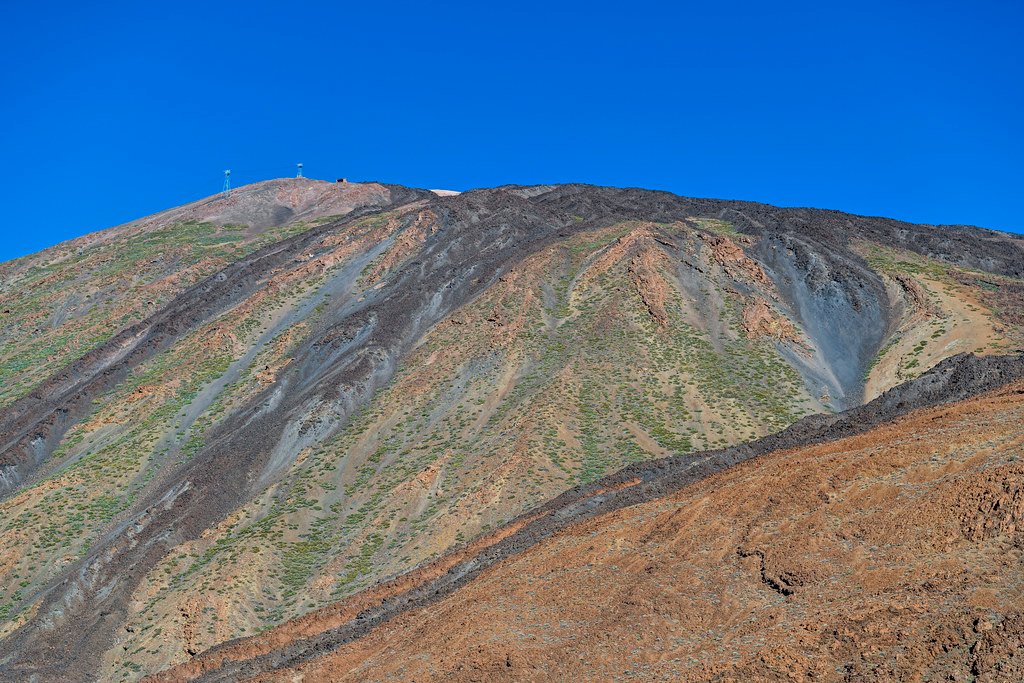
Not all volcanoes are “cones.” Their shape is determined entirely by the viscosity (thickness) of their lava and the gas content within it.
Stratovolcanoes (Composite Cones)
These are the “classic” peaks. They are built from alternating layers of lava flows and ash (tephra).
- The Science: The magma is typically Andesitic or Rhyolitic, meaning it is thick and sticky. This traps gas, leading to high-pressure, explosive eruptions.
- Hiker’s Perspective: These offer the most elevation gain but the most unstable “scree” slopes.
Shield Volcanoes
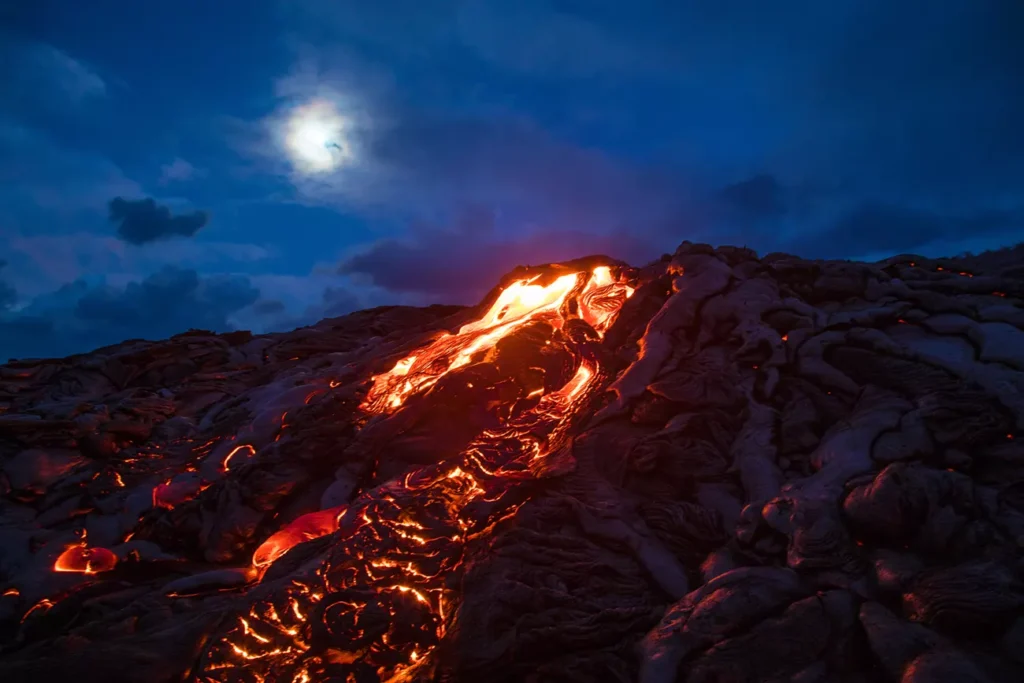
Shield volcanoes are broad and gently sloping, resembling a warrior’s shield lying on the ground.
- The Science: They are formed by Basaltic lava, which is very fluid and flows long distances before cooling.
- Hiker’s Perspective: These are often “sneaky” long hikes. The incline is gentle, but the distances are massive.
Cinder Cones
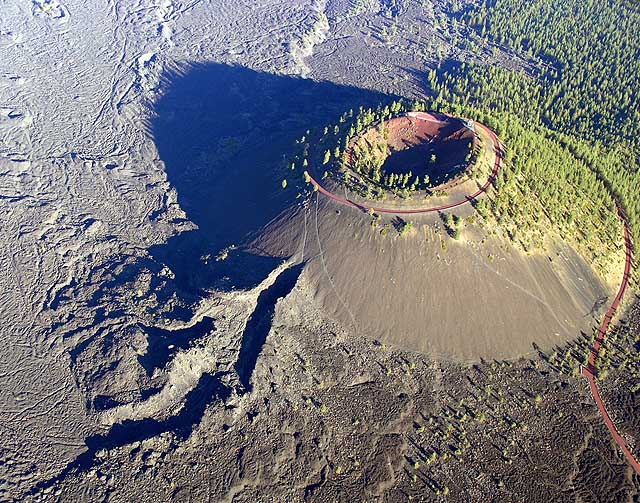
These are the simplest types of volcanoes, usually created by a single eruptive event. They are built from “scoria”—blobs of congealed lava ejected from a single vent.
- Hiker’s Perspective: Short, steep, and often very rewarding for a half-day trek
Cinder Cones
These are the simplest types of volcanoes, usually created by a single eruptive event. They are built from “scoria”—blobs of congealed lava ejected from a single vent.
- Hiker’s Perspective: Short, steep, and often very rewarding for a half-day trek
Cinder Cones
These are the simplest types of volcanoes, usually created by a single eruptive event. They are built from “scoria”—blobs of congealed lava ejected from a single vent.
- Hiker’s Perspective: Short, steep, and often very rewarding for a half-day trek
3. The Chemistry of Lava: Basalt vs. Rhyolite
If you look closely at the rocks beneath your boots, you are looking at chemical history.
- Basalt (Dark/Black): Low silica, low viscosity. It flows like maple syrup. This is what you see in Hawaii and Iceland. It creates “ropey” textures called Pāhoehoe.
- Rhyolite/Andesite (Grey/Tan): High silica, high viscosity. It doesn’t flow; it shatters or explodes. This creates the jagged, glass-like rocks that shred hiking boots.
4. Volcanic Hazards: More Than Just Lava
For the hiker, the “red stuff” is rarely the primary danger. It is the invisible or fast-moving hazards that matter most.
Pyroclastic Flows
The most deadly volcanic phenomenon. These are superheated clouds of ash, gas, and rock that scream down the mountain at speeds over 100 mph (160 kph). There is no outrunning a pyroclastic flow; safety lies entirely in exclusion zones.
Lahars (Volcanic Mudflows)
When an eruption melts a summit glacier or occurs during heavy rain, the ash mixes with water to create a slurry with the consistency of wet concrete. Lahars follow river valleys and can bury entire towns miles away from the peak.+1
Gas Emissions: The Silent Threat
Volcanoes “breathe” even when they aren’t erupting. The primary gases are:
- Water Vapor (H2O): Harmless steam.
- Carbon Dioxide (CO2): Dangerous because it is heavier than air and can collect in low-lying depressions (valleys or pits), suffocating hikers silently.
- Sulfur Dioxide (SO2): Has a “rotten egg” smell. It irritates the lungs and eyes and can create “Vog” (volcanic smog).
5. The Life Cycle of a Volcano
Volcanoes are classified by their “recent” history, though these terms are often debated by geologists:
- Active: Has erupted in historical times (roughly the last 10,000 years) or shows signs of seismic unrest.
- Dormant: “Sleeping.” It has not erupted recently but is expected to erupt again. These are the most dangerous because people tend to build homes on their slopes.
- Extinct: Cut off from its magma supply. It is unlikely to erupt again. (e.g., Edinburgh Castle sits on an extinct volcanic plug).
6. How Scientists Monitor Volcanic Peaks
Before you start your hike, a team of volcanologists has likely analyzed the mountain’s “vital signs.”
- Seismology: Tracking “micro-tremors.” As magma moves up through the crust, it breaks rock, creating distinct earthquake patterns.
- Deformation: Using GPS and tiltmeters to see if the mountain is “inflating” like a balloon.
- Gas Correlation: Measuring the ratio of CO2 to SO2. A sudden spike in sulfur often indicates that fresh magma is nearing the surface.
Conclusion: The Hiker as a Citizen Scientist
When you hike a volcano, you aren’t just a tourist; you are a witness to the Earth’s ongoing construction. By understanding the science—the difference between a shield and a stratovolcano, the chemistry of the rocks, and the warning signs of gas—you become a more capable and safer adventurer.
The next time you feel the crunch of tephra under your boots, remember: you are walking on land that was, until very recently, fire.